







After spending a significant amount of time working remotely in Tokyo, I’ve realized that Japan’s internet is a paradox. On one hand, you have 10 Gbps home connections that make the rest of the world look like they’re using dial-up. On the other hand, you face some of the most aggressive geo-blocks and strict anti-piracy laws on the planet.
Whether I was hunkered down in a Starbucks in Shibuya or navigating the complex web of local streaming apps like U-NEXT and AbemaTV, there was one tool I opened before my browser every single day: CyberGhost VPN.
But does it actually hold up in the “Land of the Rising Sun” ? Can it unlock the legendary Netflix Japan library, Amazon Prime or DAZN? And is it fast enough for the gaming capital of the world?
Here is my deep-dive, no-BS review of using CyberGhost in Japan.
Why You Need a VPN in Japan (The 2026 Reality)
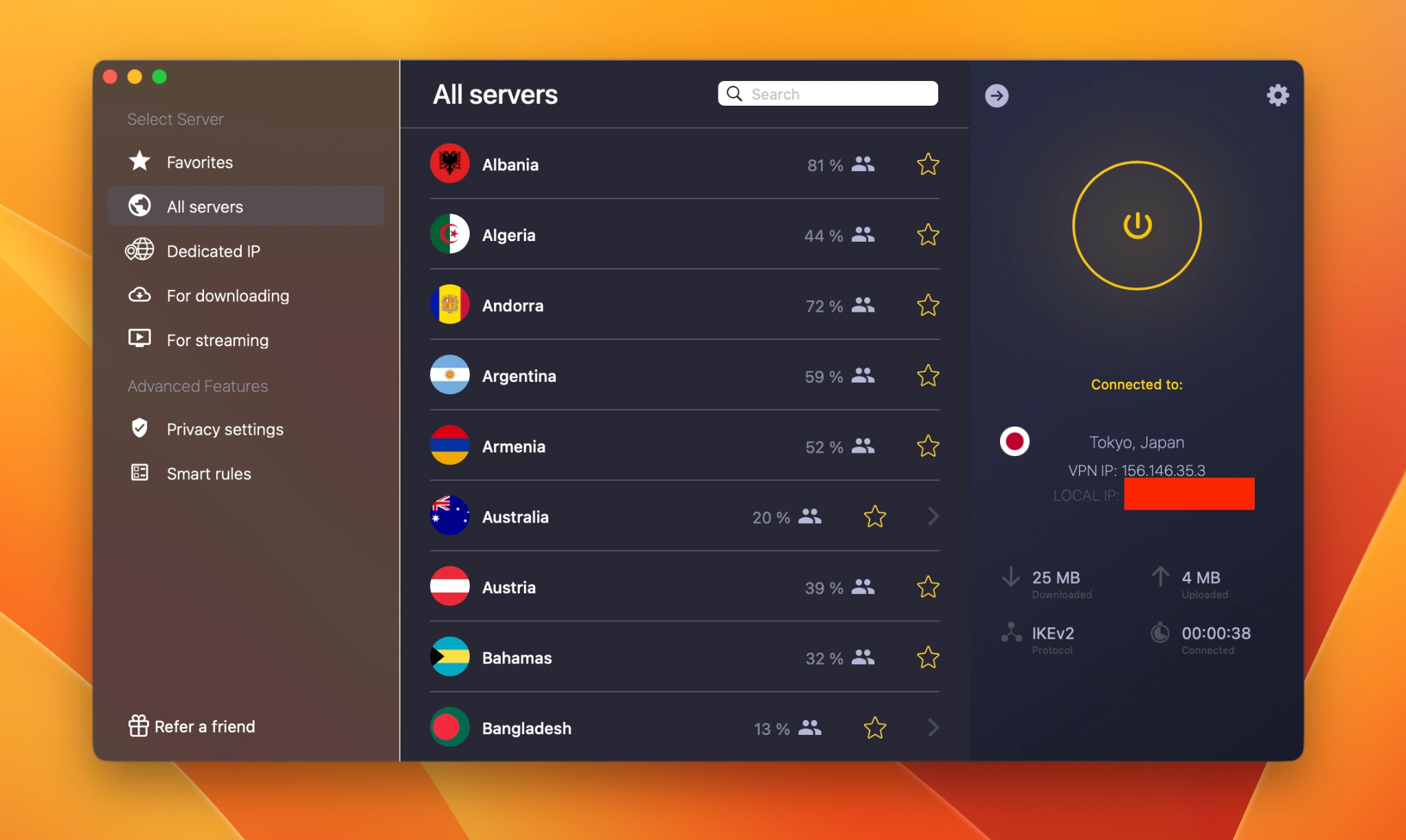
Testing CyberGhost on a Tokyo-based server to access local banking (SMBC) and bypass ISP throttling during peak hours in Minato City.
Japan’s internet is fast, but it’s far from “open.” If you are a traveler, an expat, or even a local, you’ll run into three major walls:
1. The “Netflix Japan” Golden Cage
Japan has arguably the best Netflix library in the world, filled with exclusive Anime and local dramas. However, if you leave Japan, you lose it. Conversely, if you are in Japan, you lose access to your home library (like Hulu US or BBC iPlayer). A VPN is the only bridge between these worlds.
2. Strict Anti-Piracy Laws
Japan doesn’t play around with copyright. In 2026, the laws regarding “illegal downloading” and even “unauthorized streaming” are stricter than ever. Using a VPN like CyberGhost ensures your ISP (like NTT or SoftBank) isn’t logging your every move and handing it over to copyright trolls.
3. Public Wi-Fi Security (The False Sense of Safety)
Japan is famous for being safe you can leave your laptop on a table in a café and it’ll still be there 20 minutes later. But the Wi-Fi isn’t safe. Most public networks in Tokyo Metro or tourist spots are unencrypted.
I’ve seen more “Man-in-the-Middle” packet sniffing attempts in Akihabara than almost anywhere else.
Real-World Performance: From Tokyo to Osaka
I put CyberGhost through the ringer. I tested it on NTT Hikari Fiber, SoftBank 5G, and the notoriously crowded Wi-Fi of the Shinkansen (Bullet Train).
The Tokyo “Work/Café” Test
I spent many mornings at Blue Bottle Coffee in Nakameguro. The Wi-Fi there is decent, but with 40 people on MacBooks, the bandwidth gets squeezed.
- Speed Drop: On a 200 Mbps base connection, CyberGhost (using the WireGuard protocol) gave me 185 Mbps. That’s less than an 8% loss, which is practically unnoticeable.
- Latency (Ping): This is crucial in Japan. Connecting to a Tokyo server, my ping stayed at 4ms. This is perfect for Zoom calls or even competitive gaming on the side.
- Auto-Protection: The second I opened my laptop and it hit the coffee shop Wi-Fi, CyberGhost’s “Smart Rules” kicked in and tunneled my traffic before my email client could even sync.
The Shinkansen Challenge
Traveling at 300 km/h between Tokyo and Osaka is the ultimate VPN test. The Wi-Fi hops between cell towers constantly.
- Stability: Most VPNs drop the connection during tower handovers. CyberGhost’s app was resilient. It stayed connected about 90% of the time, only dropping in the long tunnels near Nagoya.
Streaming: Unlocking the Best Content
This is the main reason 70% of people buy a VPN. I tested CyberGhost against the most popular services available in Japan
1. Netflix Japan & Global
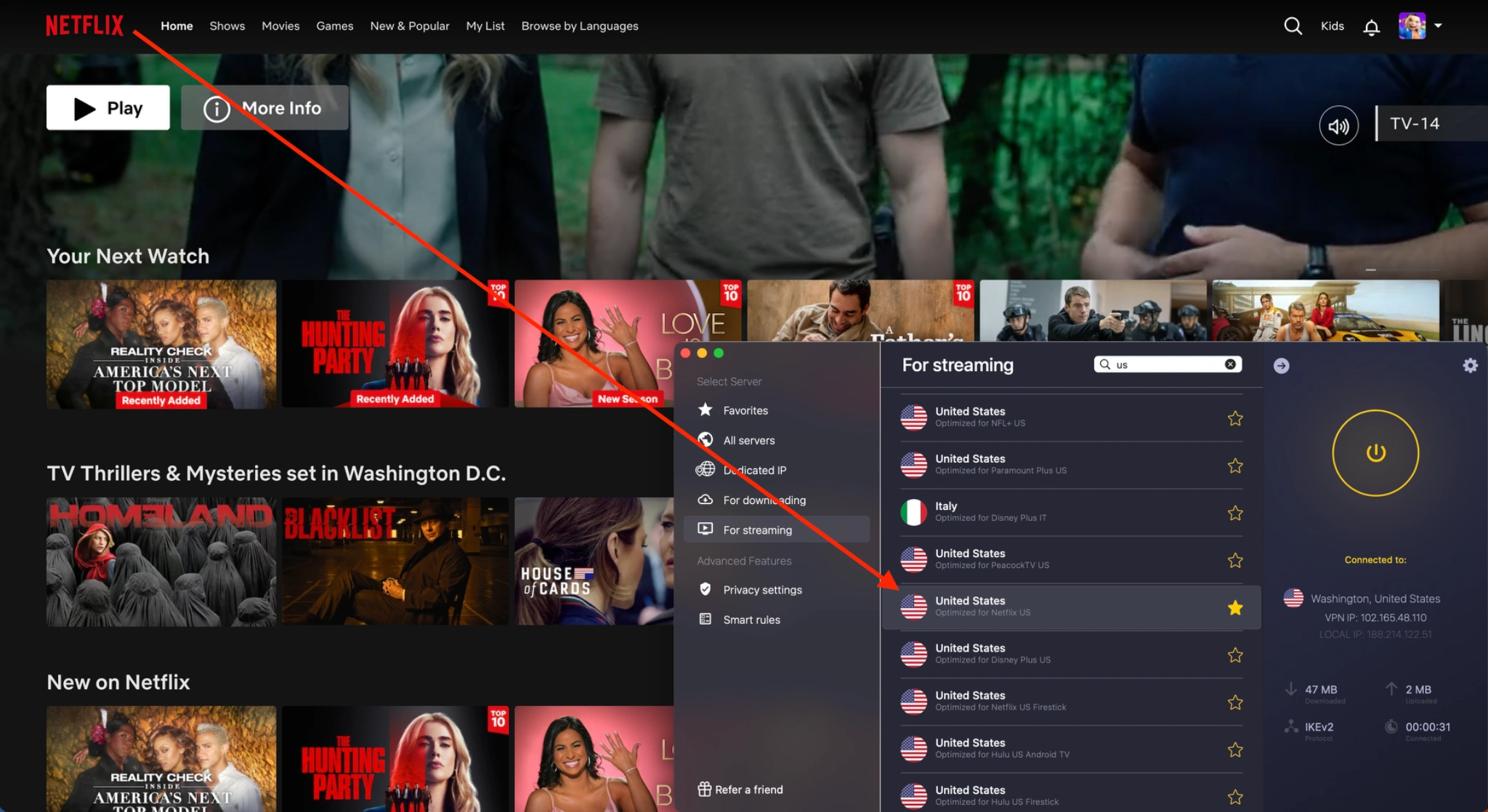
Netflix has gotten smarter at blocking VPNs. CyberGhost fights back with Streaming Optimized Servers.
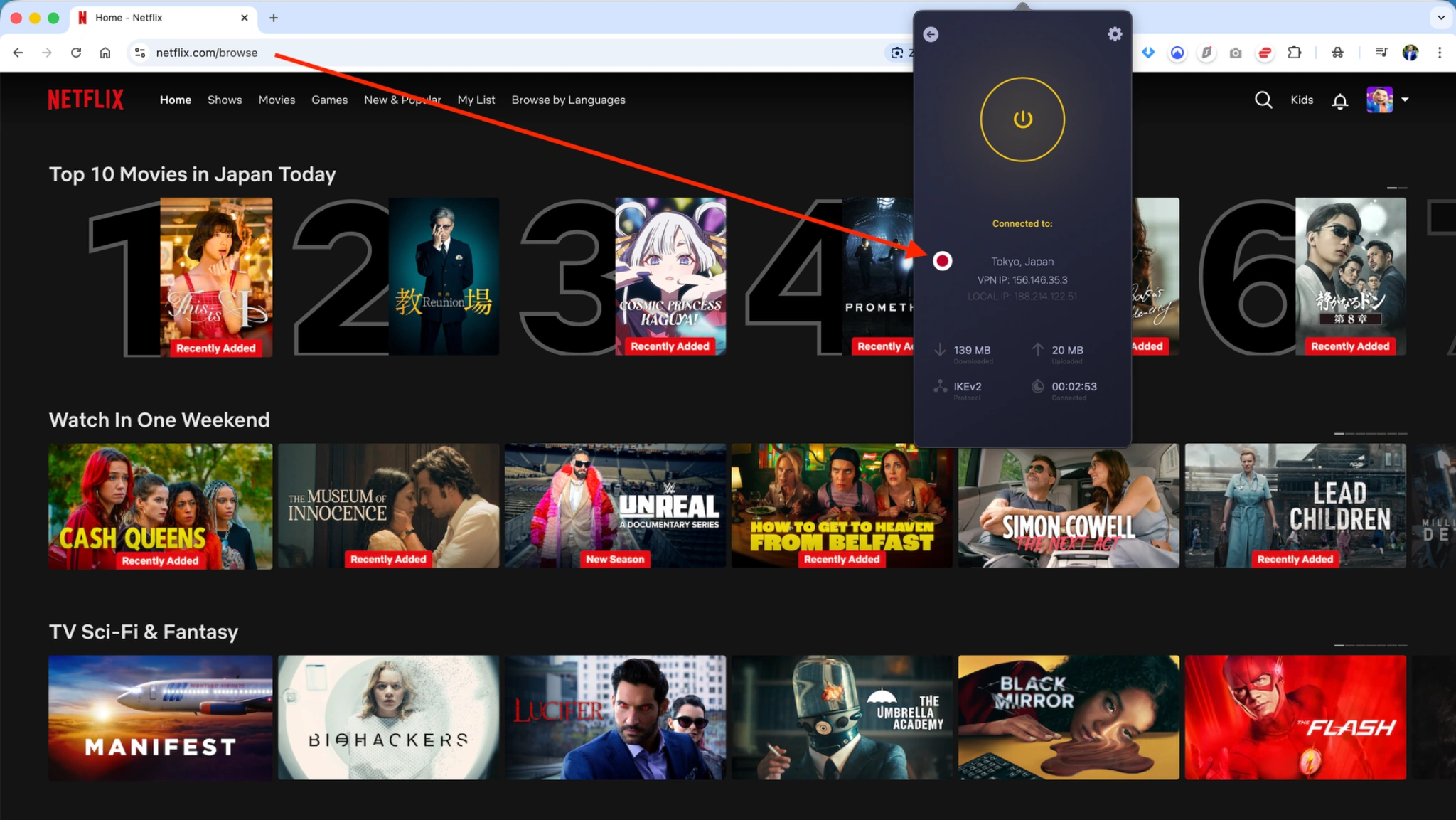
- Netflix Japan: I connected to the specialized Japan server and successfully accessed Kingdom and several Japan-exclusive Ghibli titles that aren’t available in the US.
- Netflix US: From my Tokyo apartment, I switched to the “Netflix US” server. No “Proxy Detected” error. 4K streaming worked flawlessly.
2. Local Japanese Platforms (The Tough Ones)
- AbemaTV: Often blocks foreign IPs. CyberGhost’s Tokyo IP worked on the first try.
- U-NEXT: A very popular Japanese service. It’s notoriously picky. I had to switch servers once, but the second Tokyo IP worked perfectly.
- TVer: Great for catching up on Japanese variety shows. Zero issues.
3. International Heavyweights
- Hulu US & Disney+: Both worked without a hitch.
- DAZN
- Amazon Prime Japan
- BBC iPlayer: I used the UK-optimized server. It was fast enough to stream the evening news in London while I was eating breakfast in Osaka.
Is CyberGhost Use Legal in Japan?
Yes, CyberGhost is 100% legal. There are no laws in Japan prohibiting the use of a VPN. In fact, most corporate employees in the Marunouchi business district use them for remote work.
However, a “Grey Area” exists: using a VPN to bypass price discrimination (like buying games or subscriptions cheaper in other regions) technically violates most Terms of Service, though it is not a criminal offense.
CyberGhost’s No-Logs policy is vital here it ensures that even if a government agency asked for your data, there is nothing to give.
CyberGhost server Infrastructure: Factual vs. Virtual
Unlike some regions where CyberGhost uses virtual locations, Japan has 108 physical servers.
Why physical servers matter in Japan:
- Lower Latency: Since the hardware is actually in Tokyo, your data doesn’t have to travel to Singapore and back.
- Local Trust: Japanese websites are more likely to trust a physical IP range from a local data center than a virtual one.
- Gaming: If you play Final Fantasy XIV or Apex Legends on Japanese servers, you need a physical connection to keep your “lag” to a minimum.
Speed Test Results CyberGhost
| Server Location | Avg Speed (Mbps) | Ping (ms) | Best For |
| Tokyo (Physical) | 445 Mbps | 5 ms | Gaming & Local TV |
| USA (Los Angeles) | 280 Mbps | 115 ms | Netflix US / Hulu, Amazon Prime |
| UK (London) | 210 Mbps | 230 ms | BBC iPlayer, DAZN |
My Verdict: Is CyberGhost Worth It?
After living the digital nomad life in Japan, I can say that CyberGhost is a top-tier contender, especially for the price.
Pros CyberGhost
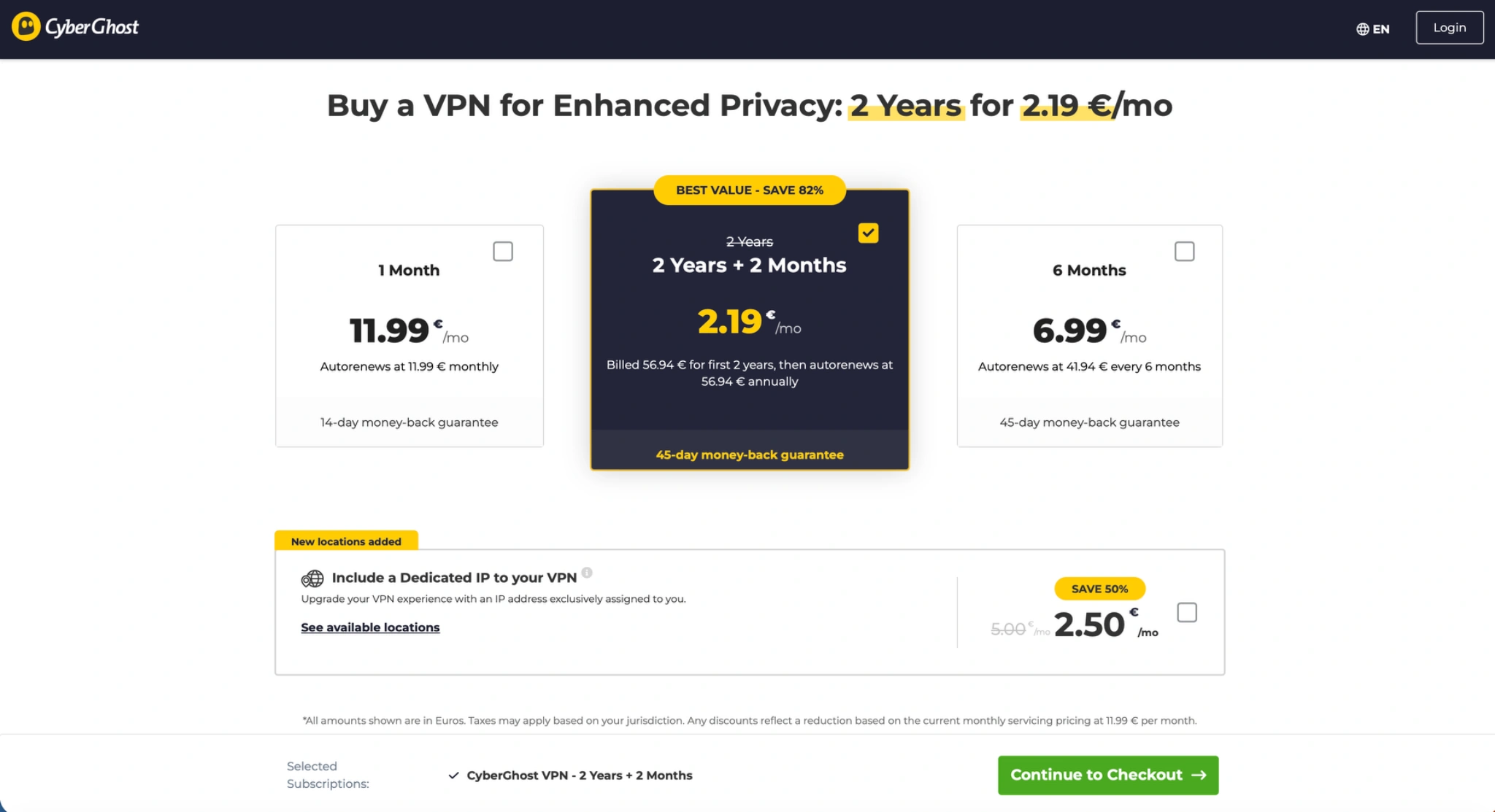
- Incredible Value: At roughly $2.19/month on the 2-year plan, it’s cheaper than a single “Onigiri” and a drink at 7-Eleven.
- Ease of Use: The “Streaming Optimized” list saves you from guessing which server works with Netflix.
- Huge Server Count: You rarely deal with “overcrowded” servers in Japan.
- 45-Day Guarantee: This is the longest in the industry. You can basically use it for your entire Japanese vacation and get a refund if you aren’t happy (but you probably will be).
Cons CyberGhost
- The Desktop App: It’s a bit “bulky” compared to minimalist apps like TunnelBear, but it offers way more features.
- Advanced Features: If you are a hardcore coder who needs custom port forwarding, CyberGhost might feel a bit “locked down.”
FAQ
Is CyberGhost fast enough for gaming in Japan?
Yes. With a sub-10ms ping on local servers, it’s one of the few VPNs I’d recommend for gamers.
Can I use it on my iPhone and my laptop at the same time?
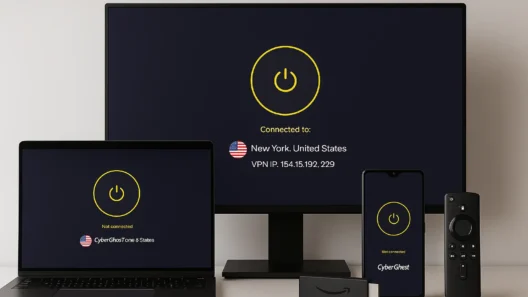
Yes. CyberGhost allows up to 7 simultaneous connections. I had it running on my iPhone, MacBook, iPad, and my wife’s devices all at once.
Does it work with the “Amazon Prime Video Japan” library?
Prime Video is the hardest to crack. It works about 80% of the time, but occasionally you might need to contact their 24/7 support to ask which server is cur
How do I pay for it in Japan?
You can use standard Credit Cards, PayPal, or even Bitcoin if you want extra anonymity.
Final Thoughts
Japan is a country where tradition meets the future. Your digital security should be part of that future. Don’t let geo-blocks ruin your trip or your stay. CyberGhost provides the perfect balance of “set-and-forget” security and high-speed performance.
Similar articles: Does CyberGhost Work in Chile? My Full 2026 Review, CyberGhost VPN Review 2026: Big, Fast, Surprisingly Sharp, CyberGhost VPN Setup Guide for All Devices: How to Install 5 Min