







While Pakistan’s government publicly courts international investors with promises of a “Digital Nation,” the reality on the ground in early 2026 suggests a country moving in the opposite direction. A sophisticated “Great Firewall” and a series of draconian cyber-sentencing cases have done more than just slow down WhatsApp; they have triggered a quiet but massive exodus of global capital.
The SECP List: 125 Departures and Counting
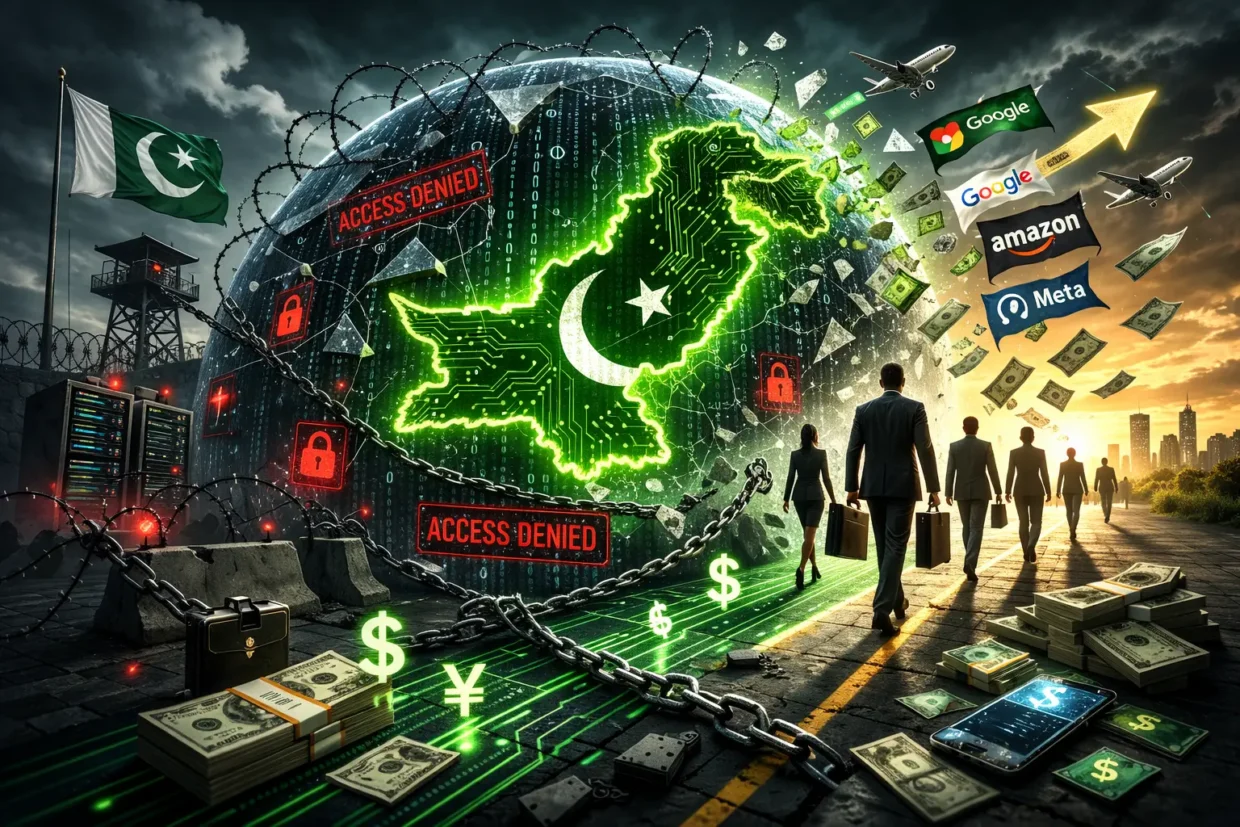
Data from the Securities and Exchange Commission of Pakistan (SECP) released in late January 2026 confirms the scale of the retreat. As of January 20, 2026, no fewer than 125 overseas companies have officially ceased operations in Pakistan’s major hubs.
The list reads like a Who’s Who of global industry: energy titan ExxonMobil, electronics giant Panasonic, and airline Lufthansa have all wound up their liaison or branch offices.
The tech sector is particularly hard-hit. Dell Global, Nortel Networks, and Telcordia Technologies are among the firms that have concluded the legal process of withdrawal.
While the SECP does not list “internet censorship” as a formal reason, the correlation is impossible to ignore. Industry leaders warn that the “regulatory vacuum” and the lack of enforceable safeguards in the National AI Policy 2025 are allowing monitoring and censorship to flourish.
Read best article about VPN and Pakistan – Best VPN for Pakistan 2026: Tested Against DPI Firewall
The GSP+ Time Bomb: A $9 Billion Threat
For a decade, Pakistan’s economy has survived on a “steroid” known as GSP+ (Generalised Scheme of Preferences Plus). This EU status allows duty-free access for over 75% of Pakistani exports, fueling a 92% surge in trade since 2014—reaching approximately $9 billion in the 2025 fiscal year.
However, the clock is ticking toward the 2027 expiration date. EU monitoring missions, which visited Pakistan in late 2025, have raised “red flags” over the country’s domestic human rights record, specifically pointing to the suppression of digital rights.
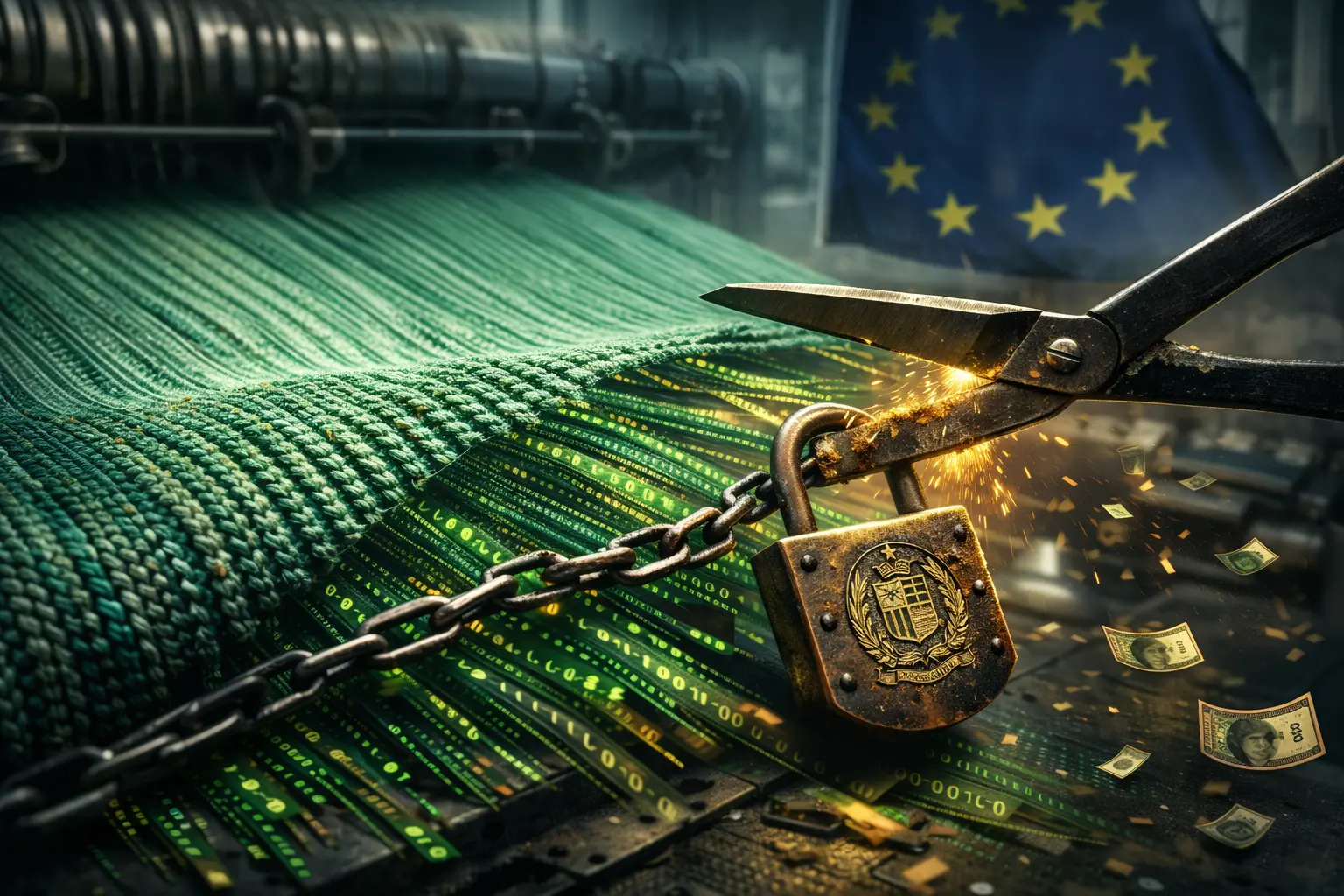
The stakes are existential:
- The 12% Death Sentence: Without GSP+, Pakistani textiles would face Most Favoured Nation (MFN) tariffs of roughly 12%. In an industry where margins are razor-thin, this surcharge is viewed by exporters as a death sentence.
- Judicial Persecution: The February 2026 sentencing of rights lawyers Imaan Mazari and Hadi Ali Chattha to 17 years in prison for social media posts has been condemned by the EU as “judicial persecution”. Such high-profile weaponization of cyber-laws is making the GSP+ renewal increasingly untenable for European lawmakers.
Digital Sovereignty & The Tools of Resistance
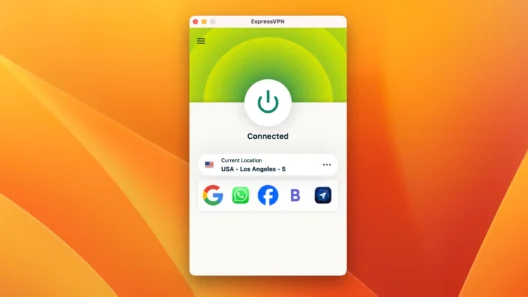
As the PTA formalizes its “licensed VPN” regime which mandates that providers like Crest VPN or Kestrel VPN share user data with the state independent premium services have become the last line of defense for privacy.
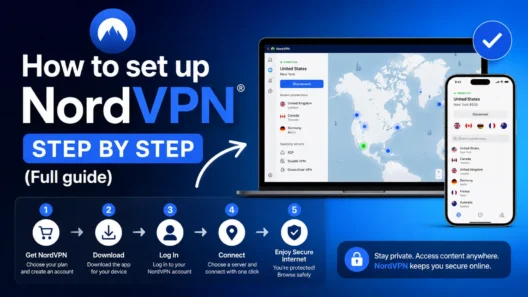
While some providers like Proton VPN faced surprise connectivity issues in early 2026, NordVPN confirmed that it had not noticed significant disruptions to its infrastructure in Pakistan.
This resilience is largely attributed to NordVPN’s advanced “obfuscated servers” and the “NordWhisper” protocol launched in early 2025 which is engineered specifically to bypass the deep packet inspection (DPI) used by the national firewall.
For the millions of freelancers and remote workers whose livelihoods depend on unthrottled access, these tools are no longer a luxury but a necessity for economic survival.
The FDI Collapse: Negative $64.5 Million
While government officials tout MOUs worth $25 billion, the actual net flows tell a different story.
Foreign Direct Investment (FDI) for the July-September 2025 period plummeted to negative $64.5 million, a staggering drop from nearly $1 billion in the same period a year prior.
The IT sector, once a beacon of hope, now loses an estimated $1 million for every single hour of internet outage.
Frequent disruptions often identified by monitors as consistent with firewall testing have eroded client confidence to the point where international stock markets and banks are flagging Pakistani service providers as “unreliable”.
Digital Mercenaries and Geopolitical Pragmatism
A fascinating paradox emerged during the May 2025 border conflict with India. After a year of banning X (formerly Twitter), the Pakistani state “silently” lifted the restrictions. Analysts believe this wasn’t a win for free speech, but a strategic move to allow users to counter Indian narratives in the global information war.
Once the crisis abated, the firewall returned with a vengeance. By February 2026, the PTA had formalized a two-tier internet:
- The Monitored Elite: Over 30,000 entities and freelancers have been forced to register their VPNs through a state portal, requiring biometric verification via NADRA and static IPs.
- The Restricted Public: General users face intermittent blocks on Telegram and Signal, along with periodic “throttling” of WhatsApp multimedia during sensitive periods.
Conclusion: A Strategic Bridge or a Digital Cul-de-Sac?
Prime Minister Shehbaz Sharif continues to describe Pakistan as a “strategic economic bridge”. Yet, the bridge is crumbling from the inside.
With 65% of citizens fearing a total loss of privacy and 125 foreign firms already out the door, Pakistan risks entering 2027 as a digital hermit kingdom that is technologically sophisticated but economically isolated.
Sources & References
- Securities and Exchange Commission of Pakistan (SECP): 125 Overseas Companies Exit Pakistan (Jan 2026) – https://www.indianewsstream.com/125-overseas-companies-exit-pakistan-by-jan-2026-secp-data/
- Dawn News: The Dual Threat to GSP+ Status and $9bn Exports – https://www.dawn.com/news/1968944
- Global Voices: Pakistan jails lawyers for 17 years over old tweets (Feb 2026) – https://advox.globalvoices.org/2026/02/20/pakistan-jails-two-lawyers-for-17-years-over-old-tweets/
- Business Recorder: FDI Plummets to Negative $64.5 Million (2025 Stats) – https://www.brecorder.com/news/40390549
- Dawn News: IT industry losses during internet outages – https://www.dawn.com/news/1876517
- Digital Pakistan: National Firewall Confirmation and Cybersecurity – https://digitalpakistan.pk/pakistan-confirms-internet-firewall-for-cybersecurity-purposes/
- Pakistan Today: PTA Licenses 9 VPN Providers and 30,000 Registered Users – https://www.pakistantoday.com.pk/2026/01/22/pta-licenses-9-local-vpn-providers-over-30000-users-registered
- Profit by Pakistan Today: EU-Pakistan GSP+ Compliance Review – https://profit.pakistantoday.com.pk/2026/02/07/pakistan-eu-officials-discuss-progress-on-gsp-compliance-ahead-of-review/