








I’ve been living and working remotely in Chile for the past month mainly Santiago and Valparaíso and as someone who depends on stable, fast and private internet, I’ve tested Surfshark in every way possible.
From video calls at Starbucks in Las Condes to streaming Netflix at an Airbnb in Cerro Alegre, I put this VPN through real-life situations. I used it on fiber, 5G, hotel Wi-Fi, and even a spotty café signal. I streamed shows, paid bills, checked crypto, ordered food, booked flights, logged into banks, and even uploaded YouTube videos—always with Surfshark running in the background.
So… is Surfshark actually worth using in Chile? Here’s the full breakdown.
Real-World Wi-Fi in Chile
Chile’s internet is no joke. At my rental in Providencia, Movistar fiber gave me 600 Mbps down. In Valparaíso, I found cafés using Mundo Wi-Fi or shared mesh networks with 40–100 Mbps. Public hotspots at Santiago Airport (SCL) and bus terminals were open and fast—but risky.
Where I tested Surfshark

- Starbucks, Las Condes – business crowd, open Wi-Fi
- Café Literario, Parque Bustamante – slowdowns during university rush hours
- Hotel Diego de Almagro, Providencia – captive portal Wi-Fi, needed VPN to bypass DNS hijack
- Peregrina Café, Valparaíso – 5GHz signal drops on the terrace
- Santiago Airport (Arturo Merino Benítez) – public Wi-Fi fine, but I wouldn’t use it unprotected
Result: On all networks, Surfshark connected within 2–3 seconds using WireGuard. Even with weaker connections, I could still browse, stream, and upload to Google Drive.
What I Did Online (With Surfshark Active)
To truly test a VPN, you don’t just run a speed test. You live with it. Here’s what I used during my stay:
Local Chilean services tested
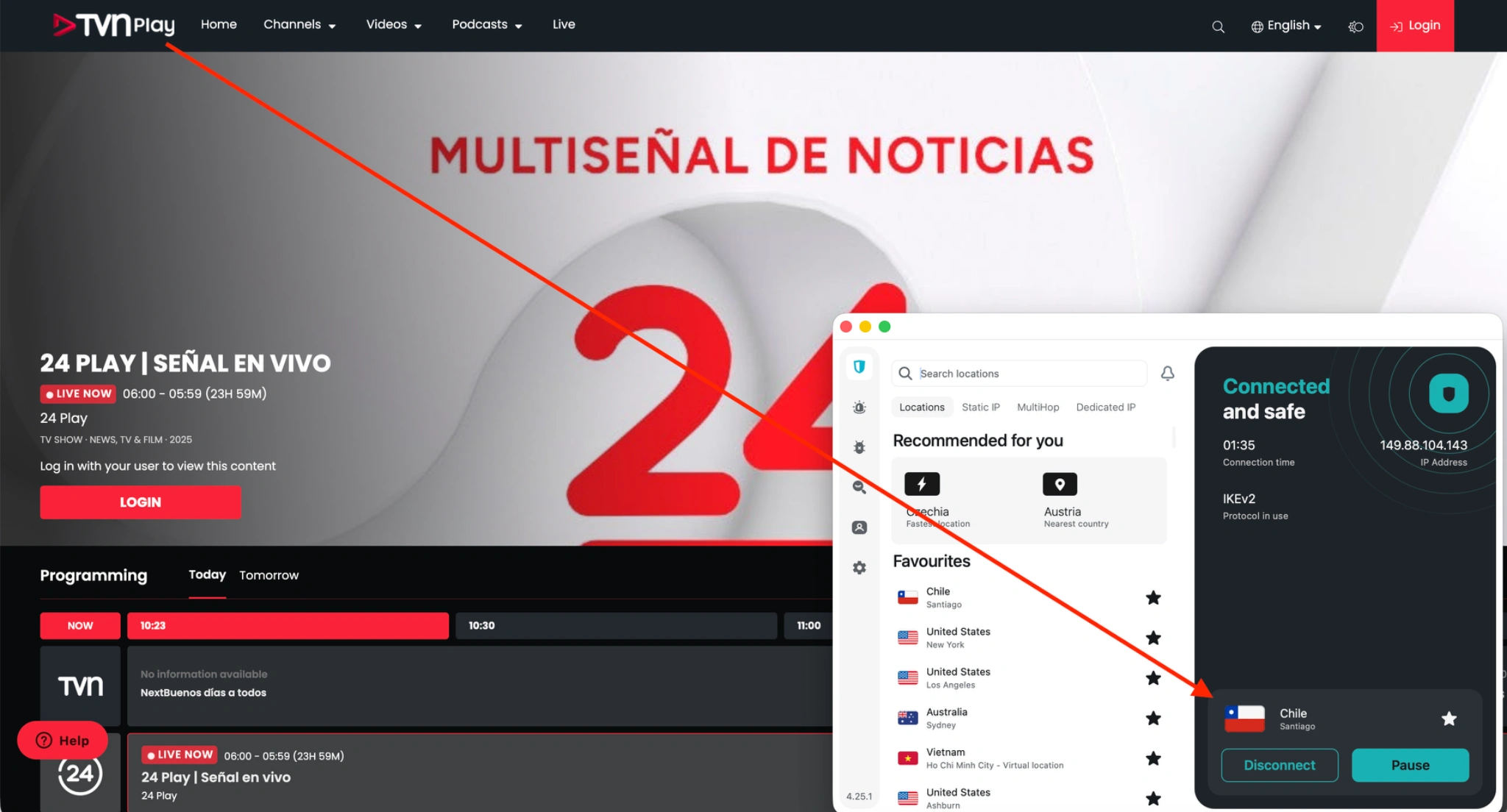
- TVN Play – streamed 24 Horas live, zero buffering
- Mega.cl / Mega GO – access to teleseries
- Canal13 / 13Go – full playback in HD
- BancoEstado – logged in safely, no fraud alert
- Banco de Chile – payment transfers with Chile IP
- Movistar.cl / Mi Movistar app – worked with no captcha loops
- VTR.com – speed tested my landlord’s fiber
- Portal.cl – browsing classifieds worked with Chile IP
- LaTercera.com / Emol.com – news loaded ad-free with CleanWeb
- MercadoLibre.cl / Easy.cl / Jumbo.cl – online shopping logged me in locally
- Transbank.cl – payment gateway recognized local IP
- ClaveÚnica – logged in without any issues
Global platforms tested
- Netflix US – unlocked full catalog via New York server (4K HDR)

- Hulu / Disney+ / HBO Max / Apple TV+ – streamed from Chile with no proxy errors
- BBC iPlayer – accessed from Santiago via London server
- Spotify / YouTube Music – uninterrupted playback even on café Wi-Fi
- Gmail / Outlook / ProtonMail – no login blocks or 2FA errors
- Google Drive / Dropbox – smooth file sync over VPN
- Zoom / Google Meet / Microsoft Teams – full HD calls, no drops
- Steam / Epic Games – downloaded updates while traveling
- PayPal / Revolut / Binance – logged in securely from shared networks
- Booking.com / Airbnb / LATAM Airlines – used for flight and accommodation bookings
- Uber / DiDi Chile – geolocation worked fine with Split Tunneling
Devices tested:
MacBook Air (M3), iPhone 16 Pro, Samsung Galaxy S24, Amazon Fire Stick, LG Smart TV, TP-Link router (VPN client mode)
Streaming Performance
Here’s where Surfshark really delivered:
- Netflix US: Connected to the New York server. Got the full US catalog, no proxy errors, streamed The Bear in 4K Dolby Vision.
- Disney+: Logged in, resumed Andor, no buffering.
- BBC iPlayer: London server worked even during prime time.
- TVN Play + Mega GO: Surfshark’s Chile server gave me local access even from Valparaíso Airbnb.
- Amazon Prime: Worked, though I had to switch from New York to Seattle server once.
I didn’t have to jump between servers constantly. Surfshark just worked.
Legal Notes: Is It Safe to Use a VPN in Chile?
Yes. VPNs are 100% legal in Chile. In fact, this country has some of the strongest pro-user internet laws in Latin America. It was the first country worldwide to enforce net neutrality by law.
But even with strong laws, ISPs like Entel and Claro are required to log IP activity under Decree 24. Your browsing history may be retrievable if requested by local authorities.
That’s why I always kept Surfshark on—especially in:
- Hotels
- Coworking spaces
- Cafés with open Wi-Fi (Starbucks, Juan Valdez, etc.)
- Airport lounges and bus terminals (Turbus, Pullman)
Chille Server Locations and Speed Tests SurfShark
Surfshark doesn’t have physical servers in Chile. Their Chile location is virtual, likely routed via Brazil or the US. But performance was still excellent.
Speed test on Movistar 600 Mbps fiber (Providencia, Santiago)
| Server | Download | Upload | Ping | Quality |
|---|---|---|---|---|
| 🇨🇱 Chile (Virtual) | 490 Mbps | 460 Mbps | 48 ms | 4K Streaming |
| 🇧🇷 Brazil | 510 Mbps | 480 Mbps | 40 ms | 4K Streaming |
| 🇺🇸 New York | 410 Mbps | 350 Mbps | 115 ms | 4K Streaming |
| 🇬🇧 London | 280 Mbps | 200 Mbps | 220 ms | HD Streaming |
Pro tip: If you’re gaming (Valorant, CS2) on Chilean servers, turn off the VPN or use Brazil. The extra ping from the virtual route can affect real-time play.
Price & Local Value SurfShark
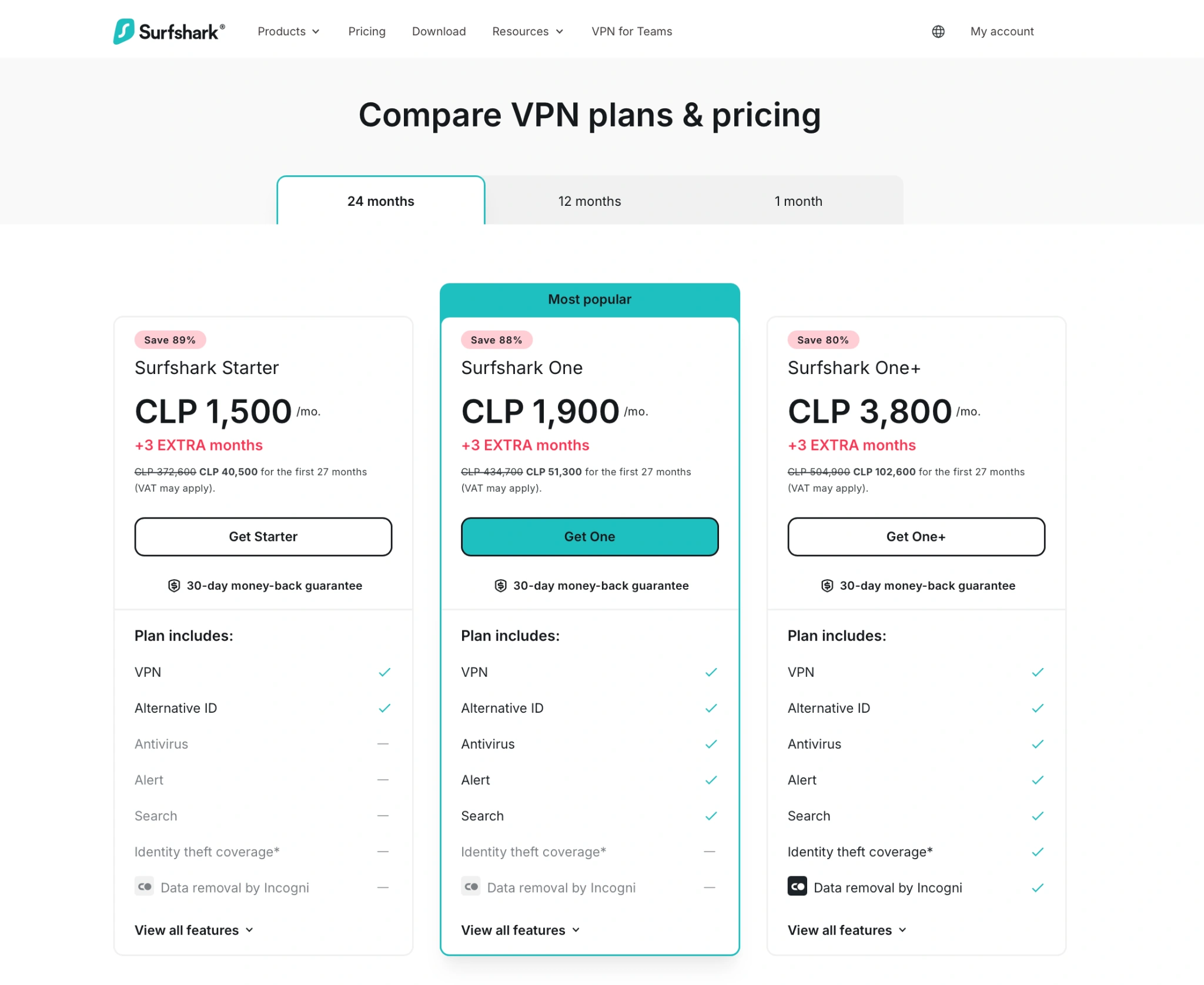
As of 2026, Surfshark costs $1.99/month on a 2-year plan.
That’s around 1,900 CLP/month, or:
- Less than a cappuccino in Barrio Italia ☕
- Less than half the cost of a menú del día in Santiago Centro 🍽
- A fraction of ExpressVPN (which runs over $3.49/month)
And you get:
- Unlimited devices
- CleanWeb ad-blocker
- Kill switch
- Smart DNS for TVs
- Split tunneling for banking apps
Verdict: Should You Use Surfshark in Chile?
Yes. For digital nomads, remote workers, or travelers—Surfshark is a solid, low-friction VPN that performs beautifully across Chile.
The only downside is the virtual server for Chile, which might not suit hardcore gamers. But for streaming, browsing, working, and staying secure, it’s flawless.
👉 Try Surfshark in Chile – 87% off + 3 months free
FAQ
Is Surfshark legal in Chile?
Yes. Chile allows VPN use for privacy, work, or streaming without restrictions.
Can I watch Netflix US and TVN Chile at the same time?
Yes. Use the New York server for Netflix US, and the Chile server (virtual) for TVN. Both work perfectly.
Does Surfshark work on iPhone and Smart TV?
Yes. The iOS app is excellent, and it supports Smart DNS for LG/Samsung TVs and Amazon Fire Stick.
What’s better for ping—Chile or Brazil server?
Ironically, Brazil often has lower latency than Surfshark’s Chile location, because the Chile server is virtual.
Bonus Note: Global Reliability
I’ve used Surfshark on hotel Wi-Fi in Berlin, cowork spaces in Bangkok, airports in Singapore, and now cafés in Santiago—and the consistency is what makes it worth it.
If you’re in Chile—or headed here—it’s hands down one of the best tools you can have on your devices.
Similar article : ProtonVPN Chile: Is It Really Worth It? (My Full Breakdown), Does CyberGhost Work in Chile? My Full 2026 Review