







You are sitting in a rental apartment in Barcelona or a beach hut in Thailand. Rent is due back home. You open your laptop, navigate to bankofamerica.com, and enter your ID and passcode.
Instead of your dashboard, you get hit with a spinning wheel, followed by a generic error message: “Online Banking is temporarily unavailable” or the dreaded prompt to call a 1-800 number.
Or worse, you get triggered by SafePass—the system demands to send a text code to a US phone number that you currently don’t have active because you swapped SIM cards at the airport.
Welcome to the Bank of America “Travel Firewall.”
Of all the major US banks, Bank of America is arguably the most aggressive when it comes to geo-blocking. If their system detects a non-US IP address, they don’t just ask questions; they often simply refuse to load the page.
Here is why BofA shuts you out and exactly how to use a VPN to trick their system into letting you back in.
The Root Cause: Why BofA Hates Foreign IPs
Bank of America’s security infrastructure is built on a “Zero Trust” model regarding location. While this keeps your money safe from international cyber-gangs, it treats legitimate travelers as immediate threats.
1. The Geo-Fence
Most BofA customers live and work in the United States. Therefore, 99.9% of legitimate traffic comes from US-based Internet Service Providers (like Comcast, Verizon, or AT&T).
When traffic arrives from a foreign ISP (like Orange in France or AIS in Thailand), BofA’s firewall flags it as “High Risk.” To prevent a potential brute-force attack, they often block the connection before you even get a chance to enter your password.
2. The SafePass Problem
This is the biggest headache for BofA customers. SafePass is their version of Two-Factor Authentication.
- The Trap: SafePass is heavily reliant on SMS text messages.
- The Reality: When you travel, you likely remove your US SIM card to avoid paying $10/day for roaming.
- The Result: The bank sends a code to a SIM card sitting in your wallet. You can’t receive it. You can’t log in.
The Solution: How to Tunnel Back to the USA
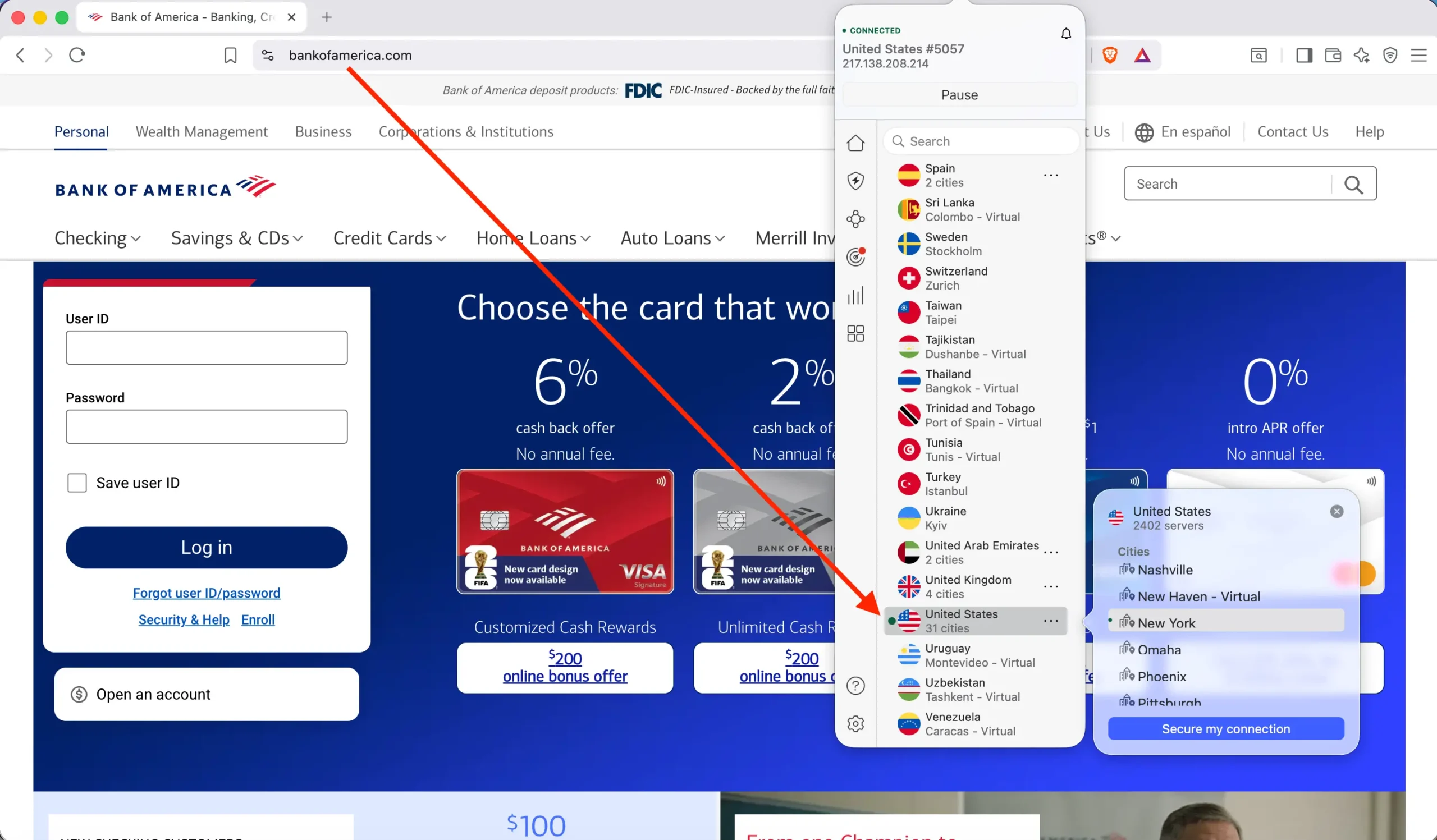
To access your money, you need to recreate the conditions of being on your couch in America. You need a VPN (Virtual Private Network).
Why a VPN Works for Bank of America
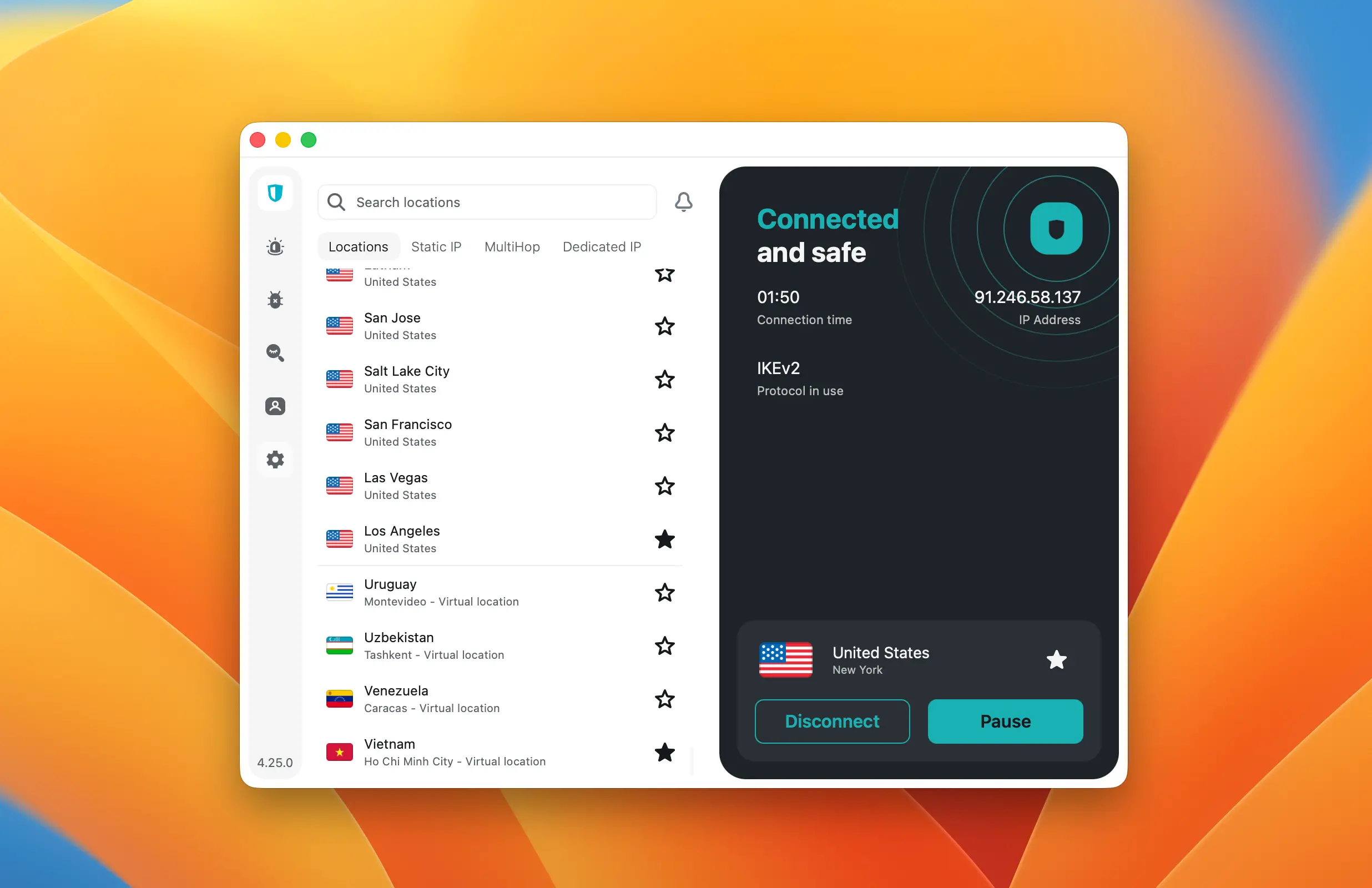
A VPN encrypts your internet traffic and routes it through a server in a location of your choice. By connecting to a VPN server in the US, you are effectively putting on a digital mask.
| 5 Best VPN for Travel | Offer + Discount | URL |
|---|---|---|
| NordVPN | 77% off + 3 months free | Try NordVPN |
| ExpressVPN | 73% off + 4 months free | Try ExpressVPN |
| SurfShark | 87% off + 2 months free | Try SurfShark |
| CyberGhost | 83% off + 2 months free | Try CyberGhost |
| PIA VPN | 82% off + 2 months free | Try PIA VPN |
- To Bank of America: It looks like you are connecting from Miami, New York, or Dallas.
- The Outcome: The geo-blocking firewall lowers its shields, and the login page loads normally.
Step-by-Step Guide to Unblocking BofA
Step 1: Clear Your Tracks Before you even turn on the VPN, clear your browser’s cache and cookies, or open an Incognito/Private window.
- Why? Browsers store location data. If your cookies say “Spain” but your IP says “USA,” the bank might spot the discrepancy and block you anyway.
Step 2: Connect to a Residential US Server Open your VPN app. Choose a server in the United States.
- Pro Tip: If your VPN offers “Streaming Optimized” or “Dedicated IP” servers, use those. They are less likely to be flagged as VPNs by banking software.
Step 3: Log In (The Moment of Truth) Go to the Bank of America website or launch the app. The site should load quickly, without the “Unavailable” errors. Enter your credentials.
Surviving the “SafePass” Challenge (2FA)
Even with a VPN, BofA might still ask for a verification code because it detects a “new device” (since you cleared your cookies).
If you do not have your US SIM card active, you have three options. You must set these up BEFORE you leave, or as soon as you regain access.
Option 1: The Email Workaround (Hit or Miss)
Sometimes, BofA allows you to send the SafePass code to your registered email address instead of a phone.
- Action: Check your settings under “Security Center” -> “SafePass.” If email is an option, enable it immediately. It is a lifesaver for travelers.
Option 2: The App Notification (Best Method)
If you have the Bank of America mobile app installed and authorized before you leave:
- Instead of an SMS, the bank can send a Push Notification to the app on your phone.
- Why it works: Push notifications work over Wi-Fi. You don’t need a cellular signal.
- The Catch: You must have authorized the device while you were still in the US.
Option 3: Google Voice / VoIP
This is a sophisticated trick for long-term travelers.
- Strategy: Port your US phone number to Google Voice ($20 one-time fee).
- Result: Your phone number now lives on the internet. You can receive SafePass SMS texts via the Google Voice app on any Wi-Fi connection in the world. BofA (mostly) accepts Google Voice numbers as valid mobile numbers.
What to Do If You Are Completely Lock Out?
If the VPN allows you to see the login page, but you can’t pass the SafePass check, you have to call them.
Do NOT use your mobile carrier. You will be on hold for 30 minutes, and it will cost a fortune.
- Use an App: Use Viber, or Google Voice to call the international collect number.
- The Number: Bank of America’s international support line is 1-315-724-4022.
- The Script: Tell the agent: “I am traveling abroad. I have my debit card, but I cannot receive SMS texts. Please help me verify my identity to unlock my online banking.”
- Verification: Be ready to answer security questions (Mother’s maiden name, first pet, etc.) or verify recent transactions (“Where did you last use your card?”).
Summary: The BofA Travel Checklist

Bank of America is notoriously difficult for international travelers, but it is manageable if you have the right tools.
- The Problem: BofA blocks foreign IPs and relies on SMS texts for login.
- The Tool: A VPN is mandatory to get past the initial firewall.
- The Access: Enable Push Notifications or Email Verification for SafePass before you board the plane.
Don’t let a “temporarily unavailable” screen leave you stranded without funds. Switch on your VPN, connect to the USA, and bank as if you never left home.
FAQ
Why does the BofA website say “Temporarily Unavailable” when I am abroad?
It is rarely a technical glitch. It is usually a deliberate geo-block. Bank of America’s firewall often blocks incoming connections from foreign Internet Service Providers to prevent fraud.
Will using a VPN trigger a security alert?
It shouldn’t, as long as you connect to a US server. A VPN actually helps avoid alerts because it makes your connection look like a standard domestic login, which the bank trusts.
I can’t receive the SafePass text code. What can I do?
If you cannot receive SMS, check if the BofA mobile app is asking for verification (Push Notification). If that fails and you haven’t set up email verification, you must call their international support line to unlock the account.
Should I set a Travel Notice before I leave?
Yes, set a Travel Notice in the app so your debit/credit cards work in stores. However, this does not prevent the website from blocking your login attempts. You still need a VPN for online banking.
Similar article:
- Can’t Access Your Chase Account Abroad? Here Is The Fix
- Can’t Access Your Capital One Account Abroad? Here Is The Fix
- Why Your Citibank Account Is Locked Abroad (How to Fix It)
- How to Login to Your Wells Fargo Account Abroad: Full Guide