





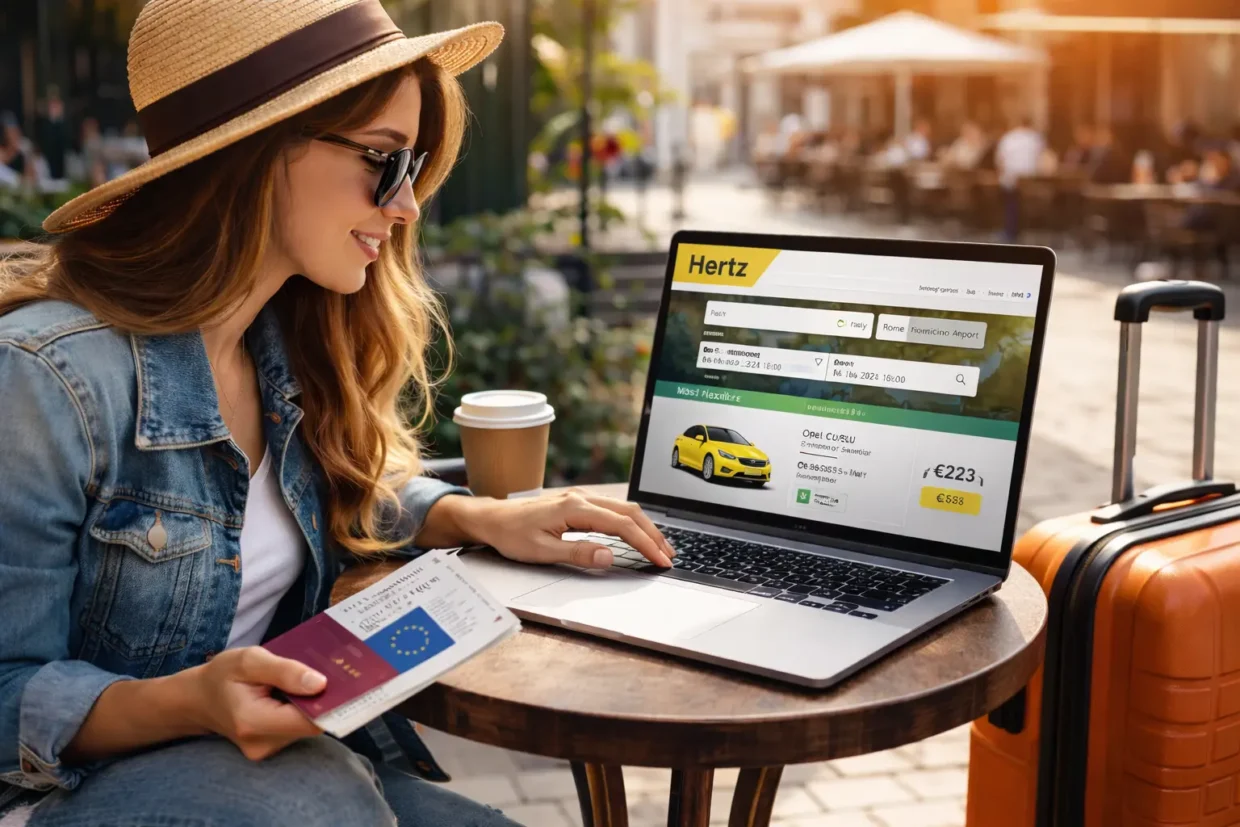
We have all been there. You have your flights booked, your hotels are sorted, and the excitement for your upcoming trip is building. Then, you sit down to book a rental car, and the excitement hits a wall. You look at the prices for a standard compact car for a week, and it costs more than your round-trip flight. The car rental market has become notoriously volatile, with prices fluctuating based on demand, inventory, and, believe it or not, where you are sitting when you book the car.
The Tool You Need to Beat the System
Before we get into the mechanics of how to beat the system, let’s cut to the chase. To pull this off effectively, you need a tool that can mask your location reliably without slowing you down.
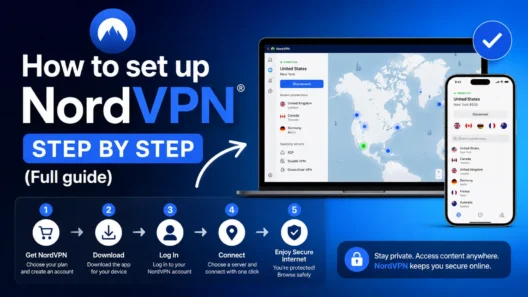
Personally, I recommend NordVPN, Surfshark, or ExpressVPN. I have tested these three extensively across multiple continents; they are fast, secure, and most importantly, they make switching your virtual location to another country incredibly simple. You just click a map, and you are “there.”
| My 3 Best VPN for Travel | Offer + Discount | URL |
|---|---|---|
| NordVPN | 77% off + 3 months free | Try NordVPN |
| ExpressVPN | 73% off + 4 months free | Try ExpressVPN |
| SurfShark | 87% off + 2 months free | Try SurfShark |
So, why does this matter? Most travelers assume that a price is a price. If you go to Hertz, Sixt, or Rentalcars.com, you expect to see the same rate as the guy sitting in a café in Paris or a hotel room in Bangkok. But that is not how the internet works.
Online pricing is dynamic, predatory, and highly personalized. Here is why browsing with a VPN is the single best travel hack for renting vehicles, whether you are looking at Avis, Enterprise, Budget, Alamo, Europcar, or Thrifty.
The “Point of Sale” Secret
In the travel industry, there is a concept called “Point of Sale” (POS). This refers to the location where a transaction is completed. Car rental algorithms are designed to maximize profit based on what they think you are willing to pay.
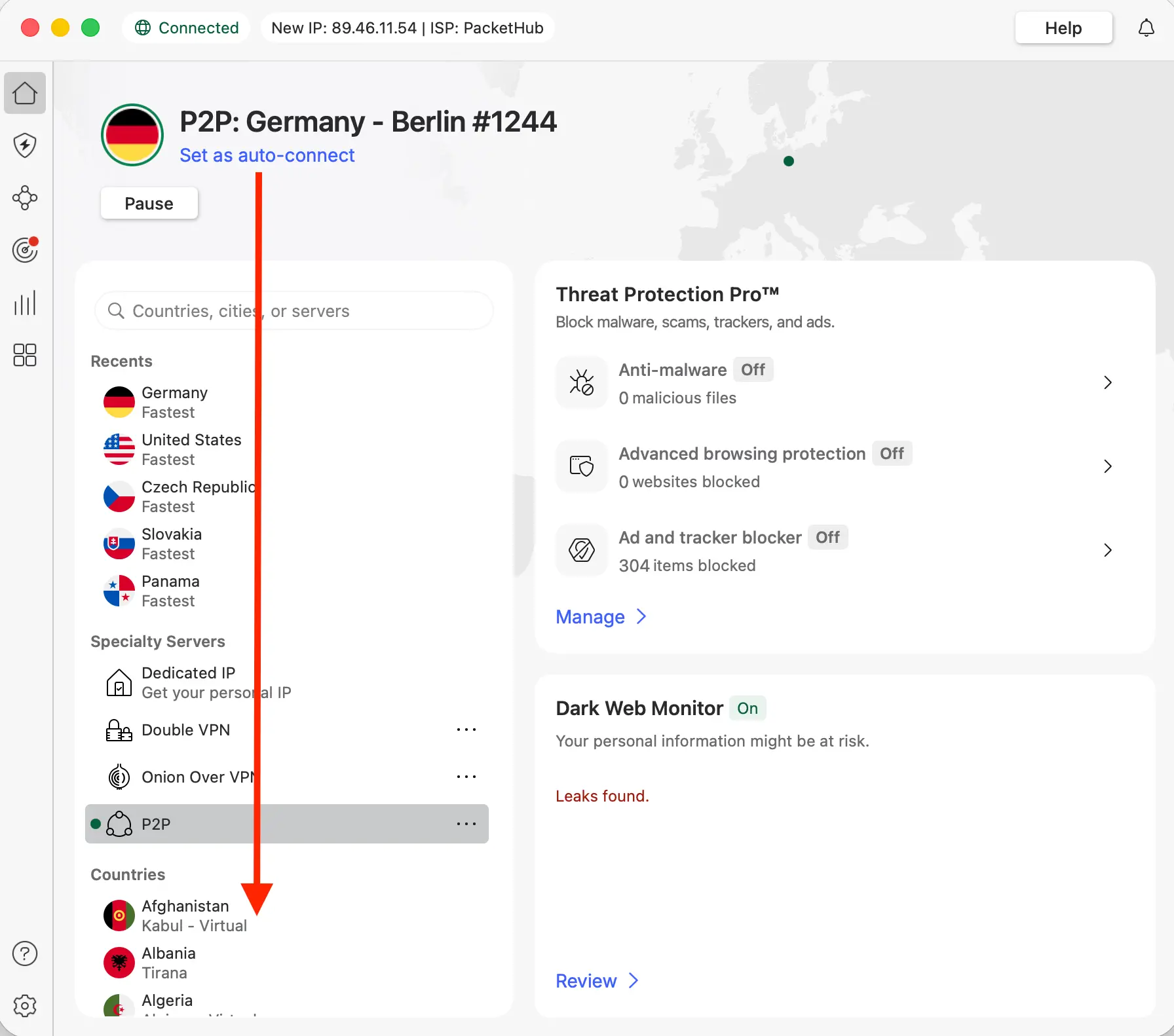
If you are booking a convertible in Miami from an IP address in London or New York, the algorithm tags you as a tourist from a high-income region. It assumes you have the budget and the intent to travel, so it serves you a “standard” (read: higher) price.
However, if you use a VPN to change your IP address to a country with a lower cost of living—say, somewhere in Eastern Europe or parts of Latin America—the rental agency’s algorithm may serve you a significantly lower price for the exact same car.
Furthermore, sometimes the best price comes from looking like a local. If you are flying to Italy to rent a car, connect your VPN to an Italian server. Domestic offers are often far more competitive than the “international tourist” rates shown to people browsing from the US or UK.
The Math: How Much Can You Actually Save?
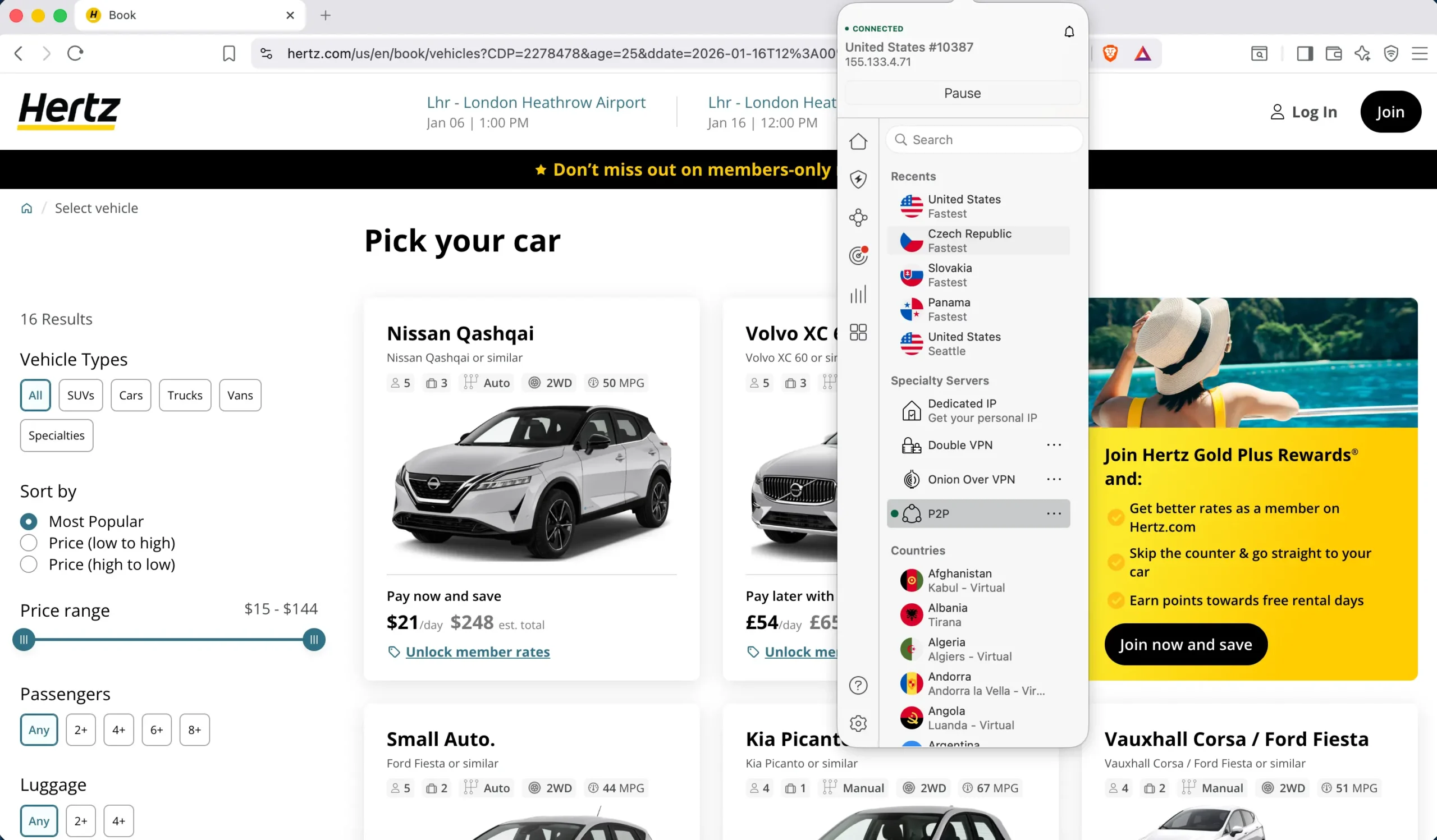
Let’s look at a hypothetical but very realistic scenario based on how these pricing engines work.
Imagine you are an American planning a two-week road trip through the south of France. You open Rentalcars.com or go directly to Europcar without a VPN.
- Your IP: USA
- The Quote: $1,200 USD for a Volkswagen Golf.
Now, you clear your browser cookies (this is crucial—more on that later), open an incognito window, and fire up your VPN. You connect to a server in Poland or perhaps Portugal.
- Your Virtual IP: Poland
- The Quote: €850 EUR (approx. $930 USD).
You just saved $270 for clicking a button.
Why does this happen? It’s not just about “rich” vs. “poor” countries. It’s about currency conversion buffers, local taxes, and regional market competition. By changing your digital footprint, you force the booking engine to treat you as a different type of customer.
Avoiding the “Dynamic Currency Conversion” Trap
Another major reason to use a VPN is to avoid terrible exchange rates. When you book from your home country, rental sites often automatically convert the price into your home currency (e.g., showing you USD when you are booking a car in Germany).
While this looks convenient, the exchange rate they use is usually terrible. They bake in a hidden fee.
By using a VPN to connect to the country where you are traveling (e.g., connecting to a German server for a German rental), you will likely see the price in Euros. You can then pay in Euros using a travel-friendly credit card (like Chase Sapphire or a Revolut card) that offers the real market exchange rate, bypassing the rental agency’s inflated conversion.
Security: The Overlooked Necessity
Let’s step away from the money for a second and talk about safety. When you are traveling, you are often booking things on the fly. You might be reserving a car from Sixt while sitting in an airport Starbucks, or extending your Hertz rental from the lobby Wi-Fi of your hotel.
Public Wi-Fi networks are notoriously insecure. They are hunting grounds for hackers looking to intercept data. When you are booking a rental car, you are typing in your full name, passport number, driver’s license details, and credit card information.
Sending that data over open hotel Wi-Fi without encryption is like shouting your credit card number across a crowded room. A VPN creates an encrypted tunnel for your traffic. Even if someone intercepts your data on that shaky airport Wi-Fi, all they will see is gibberish.
Using a VPN isn’t just about saving money; it’s about ensuring your credit card doesn’t get maxed out by a stranger while you’re on vacation.
A Step-by-Step Guide to Finding the Deals
You can’t just turn on the VPN and expect magic. The rental sites are smart; they use cookies to track your previous visits. If you looked at a price yesterday without a VPN, they “remember” you. Here is the workflow to ensure you see fresh prices:
- Clear Your Cookies: This is step one. Wipe your browser’s cache and cookies, or better yet, open a completely new “Incognito” or “Private” window.
- Turn on Your VPN: Open your VPN app (again, NordVPN, Surfshark, or ExpressVPN are the most consistent for this).
- Choose Your Server:
- Strategy A: Connect to the country you are visiting (e.g., France).
- B: Connect to a lower-income country (e.g., Brazil, India, Turkey).
- C: Connect to your home country (sometimes domestic deals are actually worse, so checking your “real” price is a good baseline).
- Visit the Aggregators First: Go to sites like Rentalcars.com, Kayak, or Expedia. These sites aggregate data from Avis, Budget, Dollar, and others.
- Check Direct Booking Sites: Once you see a good deal on an aggregator, switch your VPN to the agency’s home country and check their direct site (e.g., go to Sixt.de instead of Sixt.com if you are in Germany).
- Compare and Book: Once you find the price discrepancy, book it immediately.
Does This Work for All Agencies?
Generally, yes. The global giants Hertz, Enterprise, Avis, Sixt, Budget, Europcar, Alamo, National, Dollar, and Thrifty all use sophisticated dynamic pricing algorithms.
However, the effectiveness can vary.
- Rentalcars.com and Booking.com: These aggregators often show the biggest price swings because they serve a global audience and adjust heavily based on user location.
- Sixt: Being a German company, you can sometimes find better inventory and pricing by masquerading as a German user, especially for premium cars (BMW, Mercedes).
- Enterprise: They tend to have very localized pricing structures. Checking from a local IP vs. an international one can reveal different mileage caps or insurance inclusions.
A Note on “Unlimited Mileage”
Here is a tricky detail many travelers miss. Sometimes, a rental booked from the US for a car in Europe includes “Unlimited Mileage” as a standard perk to attract American tourists. However, a local European booking might have a mileage cap (e.g., 200km/day).
When you use a VPN to book as a “local,” always read the fine print. You might get a cheaper rate, but ensure you aren’t accidentally signing up for a limited mileage plan if you plan to drive across the whole country.
Conclusion
The internet was supposed to make travel transparent, but in reality, it has created a walled garden where your location dictates the price you pay. Rental car companies optimize their profits by analyzing your data. By using a VPN, you take that control back.
Whether you are looking for a minivan on Rentalcars.com for a family trip or a luxury sedan from Sixt for a business meeting, changing your digital location is the smartest five-minute investment you can make. You get the security of encrypted browsing and the potential to slash hundreds of dollars off your bill.
Don’t let your IP address determine your travel budget. Mask up, switch regions, and drive off with a better deal.