






Let’s be honest, we’re all a bit schizophrenic when it comes to artificial intelligence. On one hand, we’re completely blown away by it. We have it generate texts, images, help us with code, and plan our vacations. On the other hand, there’s a little worm of doubt gnawing at the back of our minds. What does this thing actually know about me?
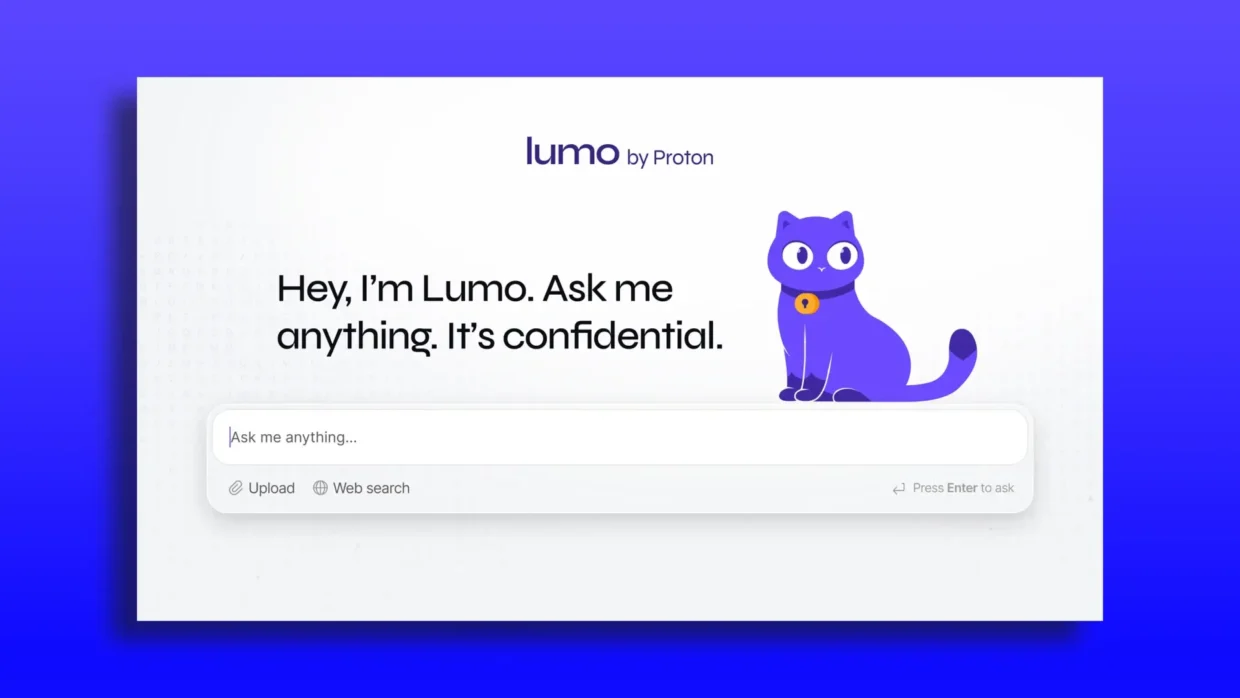
Who’s reading my conversations? Is it using my brilliant ideas to train some digital monster that will one day take over the world? And it’s at this exact point that Proton enters the stage with its new baby, which they call Lumo.
Proton, those are the Swiss guys who are a bit obsessed with privacy. Their Proton Mail is legendary. And now, they’ve decided to bring the same dose of paranoia into the world of AI.
So, I decided to put them under the microscope. Not just the marketing fluff, but a real deep dive. How does it all work? What technologies are they using? And is it really as secure as they claim, or is it just another clever trick to get us into their ecosystem? Get ready, this is going to be a ride.
What the Heck is Lumo? (And Isn’t It Just Another ChatGPT Clone?)
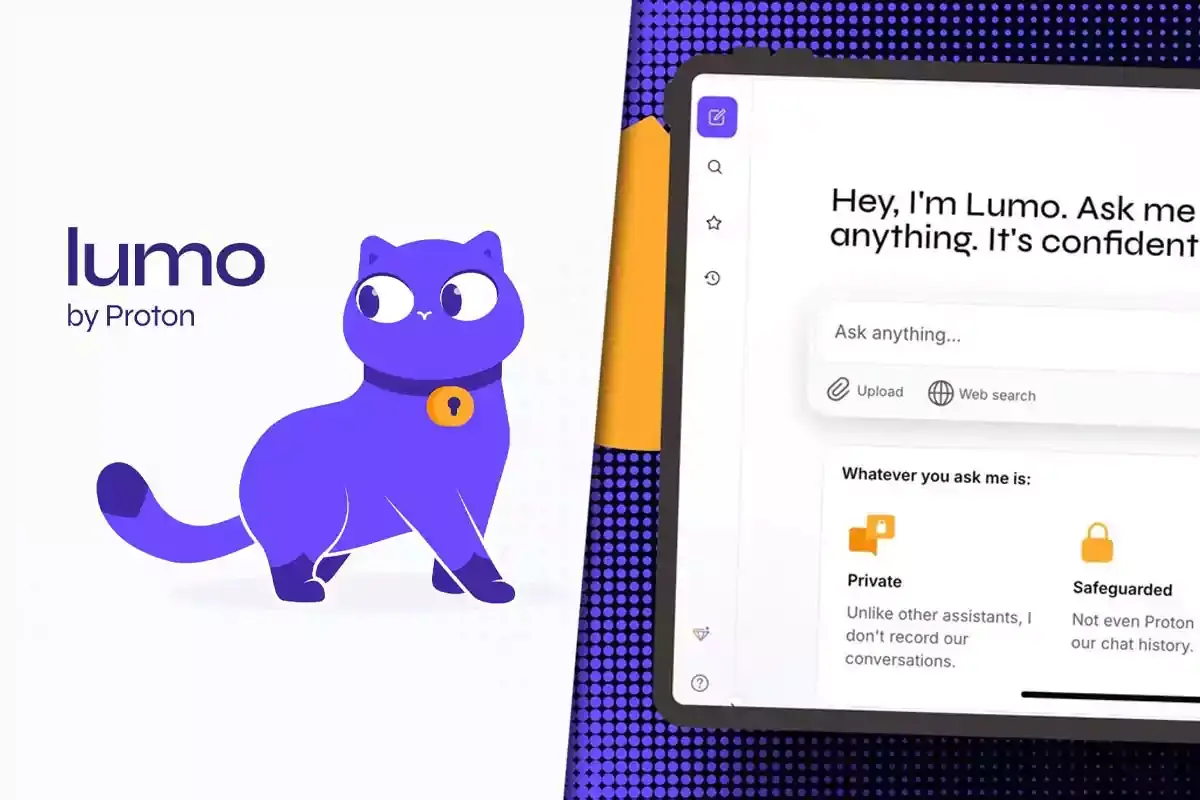
At first glance, it might seem like Lumo is just another one in the crowd. Another chatbot you can ask for the capital of Tajikistan or have it write a poem about a lost sock. And yeah, it can do all that. You can use it on the web, in a mobile app, and it works exactly as you’d expect. But that’s not the point.
The fundamental difference is in what’s happening behind the scenes. While with most other AI assistants you’re sending your data into a giant, opaque cloud where God knows what happens to it, Proton decided to go in the complete opposite direction.
Their main selling point isn’t “we’re the smartest,” but “we’re the most trustworthy.” And in this day and age, where privacy is becoming a luxury item, that’s a damn bold claim.
Proton’s Privacy Paranoia: How Are They Handling It with AI?

This is the most important part. How can an AI function if you don’t feed it data? Proton has built this on several pillars that are typical for their products:
- Zero-Access Encryption: If you decide to save a conversation with Lumo, it’s encrypted in such a way that absolutely no one can access it. Not even the most curious IT guy at Proton. Only you have the key. Period.
- No-Logs Policy: This one is a killer feature. Proton claims it doesn’t store any records of what you discuss with Lumo. Your conversation happens, you get a response, and that’s the end of it. No files, no logs on the server.
- No Training on Your Data: Your questions, ideas, texts—literally nothing you type into Lumo is ever used to train their models. This is a fundamental difference compared to the competition, which uses your data (even if anonymized) to make their AI “smarter.”
- European Soil: The whole thing runs on servers that Proton physically owns and controls in Europe. No American clouds, no vague jurisdictions. Everything is subject to strict European laws like GDPR.
All of this together creates a kind of digital fortress. But how can such an AI be smart if it doesn’t learn from interactions? The answer lies in the models they’ve chosen.
The Brains of the Operation: What Models Does Lumo Actually Use?
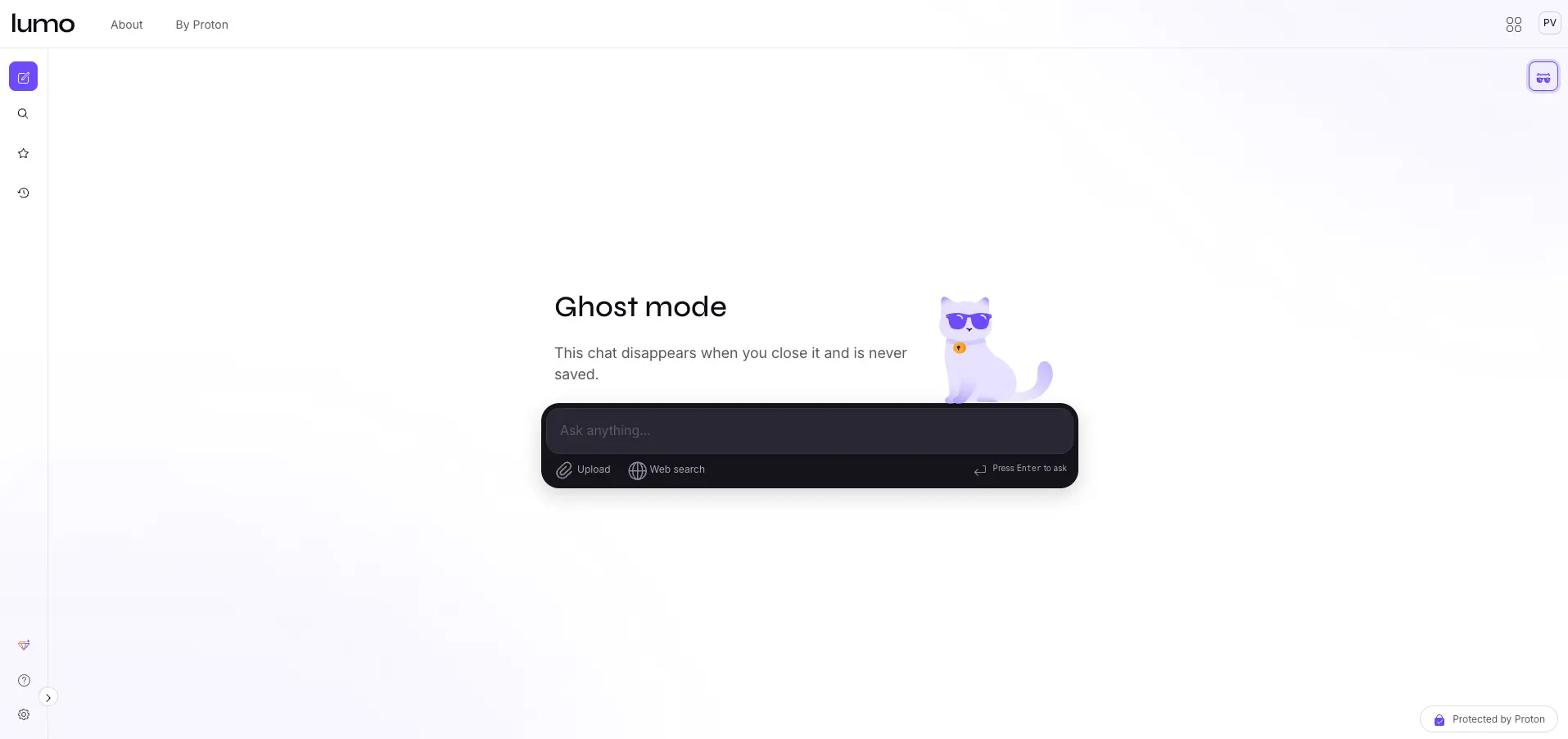
This is where it gets really interesting. Proton didn’t create one giant, monolithic model. Instead, they opted for a clever strategy known in expert circles as a “Mixture of Experts” (MoE). Imagine it as a team of specialists.
Instead of one jack-of-all-trades who’s average at everything, you have a team of experts and a smart manager (a router) who assigns your task to the most qualified person for the job. And the best part? This entire team is built on open-source technologies.
NVIDIA NeMo: The Pro’s Building Kit
The first thing we need to understand is that NeMo isn’t a language model itself. It’s more like a professional toolkit from NVIDIA. It’s a framework that allows Proton to take various open-source models, customize them, optimize them, and deploy them efficiently. It gives them absolute control over the entire process and independence from any single technology.
Mistral Small: The French All-Rounder Express
As the main “generalist” for everyday conversation, Proton chose a model from the French company Mistral AI. Mistral Small is known for being incredibly fast and efficient.
It’s not the biggest and most powerful model on the market, but for 90% of common queries, it’s perfectly sufficient, and its speed ensures a smooth conversation. Plus, it’s great in multiple languages, which is key for a global service like Proton.
OpenHands: The Coding Ace Up Its Sleeve
When you ask Lumo something about programming, your query probably won’t go to Mistral. Instead, it will land on the desk of a specialist named OpenHands.
This isn’t just some model; it’s more of an “AI agent” designed specifically for writing, fixing, and analyzing code. It understands the context of programming languages much better than general models, so its answers are more accurate and useful.
AI2 OLMO: Heart on Its Sleeve and Absolute Transparency
This one is my personal favorite. OLMO, from the Allen Institute for AI, is a model built on a philosophy of radical transparency. Most companies show you their model as a “black box.”
You give an input, you get an output, but what happens inside is a secret. With OLMO, everything is open. Not just the model’s code, but the complete training data and procedures. For a company like Proton, which builds its reputation on trust, using such a model is a logical and brilliant move.
Not Just Lumo: Where Else Is Proton Stuffing AI?
While Lumo is the flagship, Proton has started integrating AI into its other products, but always with a specific purpose and security in mind.
Proton Scribe: Your Private Copywriter in Your Email
Right inside Proton Mail, you’ll find an assistant named Scribe. It helps you formulate emails, correct grammar, or change the tone of a message. Its greatest magic? It offers the option to run directly on your device.
This means the text of your email never leaves your computer. The data isn’t sent to any server at all. That’s the absolute maximum privacy you can imagine today.
Proton Sentinel: The AI Bouncer for Your Account
Sentinel is something completely different. It’s not a generative AI you’d chat with. It’s a security system that uses artificial intelligence to guard your account. It analyzes login anomalies and suspicious activities.
If someone tries to hack into your account, the AI recognizes it and, in combination with a human analyst, blocks the threat before it can do any damage. It’s basically your personal AI bodyguard.
The Big Showdown: How Does Lumo Stack Up Against the Goliaths (Google & Microsoft)?
Alright, so Proton has a super-secure solution. But how does it hold up in practice against the giants? Let’s break it down honestly.
| Feature | Proton Lumo | Google Gemini | Microsoft Copilot |
| Training on Data | A strict NO. Never. | Yes. Default setting. | Yes. Default setting. |
| Transparency | Based on open-source. | Complete black box. | Complete black box. |
| Business Model | You pay for the product (Lumo Plus). | You pay with your data (ads). | Part of an expensive ecosystem. |
| Main Risk (per analysis) | Not as “powerful” as the biggest models. | Your data is the product. | Security holes (“over-permissioning”). |
With Microsoft’s Copilot, a huge problem called “over-permissioning” has emerged. Copilot has access to everything you have access to. If your company has messy permissions (and almost every company does), Copilot could accidentally leak sensitive financial reports to someone from a completely different department.
That’s a ticking time bomb. With Google, it’s the same old story – your interactions are used to improve their advertising monster.
My Verdict: Is Lumo Worth Considering?
After all these hours of research and testing, I’ve come to a clear conclusion. Lumo is not for everyone. If you’re looking for the absolute most powerful, most creative, and strongest AI in the world and you don’t give a damn about what happens to your data, then Lumo probably isn’t for you. It can sometimes seem a tad less “smart” than the latest GPT-4 and its derivatives.
But…
This product is for people who care about their digital privacy. It’s for developers wanting a reliable coding assistant without worrying that their code will end up in a competitor’s training set. And it’s for any business that simply can’t afford the risk of a sensitive data leak.
Or if you’re simply a person who is sick and tired of being the product for big tech companies, then Lumo is something you should seriously consider.
| Service | Key Feature | Try It Out |
| Proton VPN | Secure and private internet access, allowing you to browse without borders. | Try Proton VPN |
| Proton Pass | A password manager that protects your identity with secure logins and email aliases. | Try Proton Pass |
| Proton Mail | End-to-end encrypted email that ensures no one can read your messages, not even Proton. | Try Proton Mail |
| Proton Drive | Encrypted cloud storage for your files, so you can store and share them securely. | Try Proton Drive |
Proton isn’t playing the game of who can build the biggest digital brain. They’re playing the game of who can win the trust of their users. And in that discipline, I dare say, they are currently leading by several lengths. They didn’t just give us another AI assistant.
They gave us a choice. And in today’s world, that might just be the most valuable thing of all.