










While most VPN providers are still bragging about 10Gbps servers, Surfshark just quietly did something way bigger. They launched the world’s first 100Gbps VPN servers in Amsterdam.
That’s not a small upgrade. It’s a massive leap forward. This is the kind of shift that could completely change how we think about VPN performance.
Why does 100Gbps matter?
We’ve all heard the “faster servers” pitch before, right? But this one is actually real. The jump from 10 to 100Gbps isn’t just about better bandwidth. It’s a complete hardware overhaul.
Think about it. A 10Gbps VPN server can handle a few thousand users. A 100Gbps beast? That thing can serve tens of thousands of users at once. Everyone streaming, gaming, uploading, downloading, video-calling. And no one hits a bottleneck.
Imagine you’re downloading a 150GB game. Your partner’s streaming Netflix in 4K. Your kid is uploading school projects. And you’re on a video call with your boss. That’s a stress test. But with this setup, everything runs smoothly. No lag, no buffering, no slowdown.
It’s not just speed. It’s a smarter infrastructure.
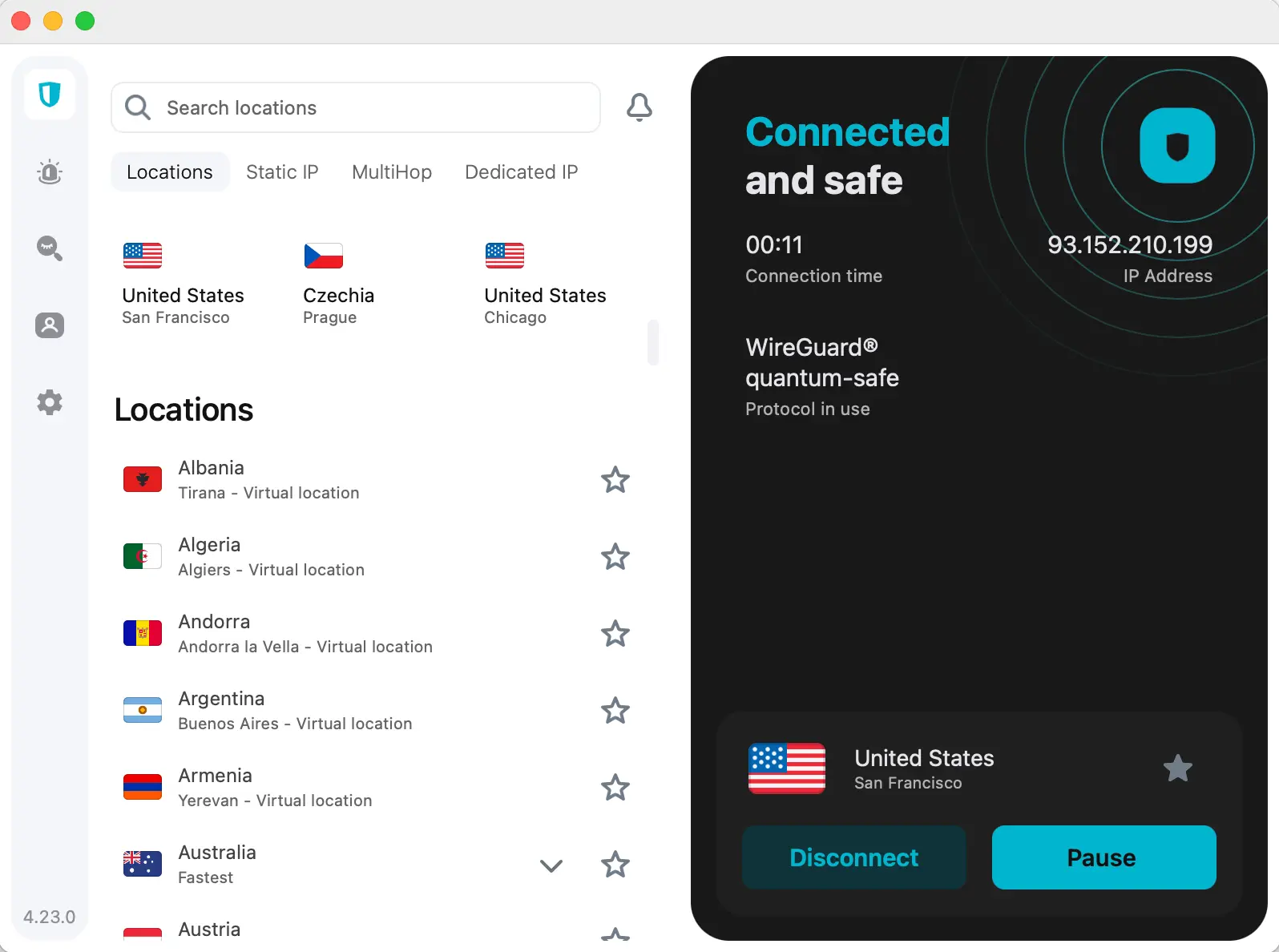
These new servers aren’t only about going faster. They come with serious tech upgrades. We’re talking high-core CPUs, next-gen network interfaces, smarter load balancing, and better support for modern VPN protocols like WireGuard.
Here’s what that means for real-life use:
- You’ll get stable speeds even when the server is crowded.
- Encryption is faster and more efficient.
- Ping stays low for gamers.
- Streaming in 8K? No problem.
- Peak-hour slowdowns? Forget it.
This is how VPNs should feel. Fast, stable, invisible.
The upgrade comes at the perfect time
More people are working remotely. Streaming is getting heavier. File sizes are growing. AI tools, smart homes, VR, cloud backups — it all adds up. Old-school 10Gbps setups just won’t keep up much longer.
Surfshark isn’t waiting to catch up later. They’re getting ready now. That’s what this launch is really about. Future-proofing.
And when the rest of the industry starts scrambling to upgrade, Surfshark will already be there.
Why servers in Amsterdam?
Because it’s one of Europe’s internet powerhouses. Super low latency, great infrastructure, and ideal for testing performance under heavy load. It’s the perfect place to stress-test next-gen servers before rolling them out worldwide.
From what we’ve heard, this is just the beginning. Once the 100Gbps architecture proves itself, more locations will follow.
What it means for you
This new tech means you don’t have to compromise anymore. You can run a VPN and still enjoy full speed. No more picking the “least bad” server. No more turning off VPN just to upload something faster.
You hit connect and forget about it. Everything just works.
Final thoughts
This might sound like a techy update, but it’s actually a big shift. For years, VPNs have been a tiny bit of a burden. Slightly slower speeds, occasional hiccups, that kind of thing. But with these new servers, those issues could be gone for good.
Other providers will follow, eventually. But right now, Surfshark is leading. And if you care about performance, that matters.
Pro tip
The 100Gbps servers are live in Amsterdam, and more will follow. But even their current 10Gbps network is one of the fastest out there. If you’re looking for a VPN that actually keeps up with your internet, Surfshark is one of the best picks right now. Especially with their deal running up to 87% off.