








I’ve used Surfshark for years not just as a backup VPN, but as the default tool that protects my team’s entire workflow. One account, unlimited devices, clean interface, and it just… works. Whether I’m working from Europe, managing remote teams, or testing tools across continents, Surfshark is part of the setup.
But there was one big question I hadn’t tackled: How well does Surfshark work in Egypt?
I hadn’t been back since 2020, when I visited Cairo with my wife and kids — just before the world flipped upside down. It was a whirlwind of pyramids, street food, hotel WiFi that barely held a signal, and a reminder that digital security isn’t optional anymore. Since then, I hadn’t had the chance to return.
So I did the next best thing.
I Asked Two Friends Who Live There And Work for Microsoft
Karim and Amira aren’t just old friends. They’re engineers who live and breathe cloud infrastructure and digital security. They both work at Microsoft’s regional operations based in Cairo. We met years ago at a tech event in Prague, stayed in touch, and built a shared obsession for clean code, remote freedom, and travel-friendly tech stacks.
When I told them I wanted to test Surfshark properly in Egypt not just for blog clicks, but for actual use cases they were in.
“You can’t talk about VPNs in Egypt without talking about public WiFi, throttled speeds, and silent filters,” Karim told me.
So we ran tests. We used Surfshark in cafés, apartments, coworking spaces, airports, even on mobile hotspots across multiple cities. I asked questions, they gave honest feedback. What follows is not a lab review — it’s the reality of Surfshark in Egypt, based on the people who live and work there every day.
Why Egypt is a VPN-Required Country
Let’s be blunt. Egypt is not the easiest place to be online.
- Public WiFi is unreliable at best, malicious at worst
- Some websites are randomly blocked with no clear reason
- Streaming platforms like Netflix, Hulu, or BBC iPlayer show limited libraries
- Government-level filtering affects news, forums, and even developer tools
- Mobile data is throttled during peak hours, and hotspots are often unstable
And despite all this, Egypt is one of the most vibrant, connected, and fast-evolving digital landscapes in Africa. But to navigate it safely and productively, you need help.
That’s where Surfshark came in.
Local Test Locations: Cairo, Hurghada, Aswan
Between Karim and Amira, we covered a good chunk of Egypt’s digital map. Here’s where they tested Surfshark:
- Cairo (Maadi, Zamalek, and New Cairo) — mix of home WiFi, coworking hubs, public cafés
- Hurghada (El Gouna resort) — hotel WiFi and mobile LTE
- Aswan (family home during Ramadan) — slower DSL and shared connections
Each location offered unique challenges: hotel firewalls, low signal, limited bandwidth, and dozens of connected devices. Surfshark was tested on laptops, iPhones, Android phones, smart TVs, and even a dusty Windows laptop with Chrome tabs from 2013.
Streaming Performance: Unlocking the Full Internet
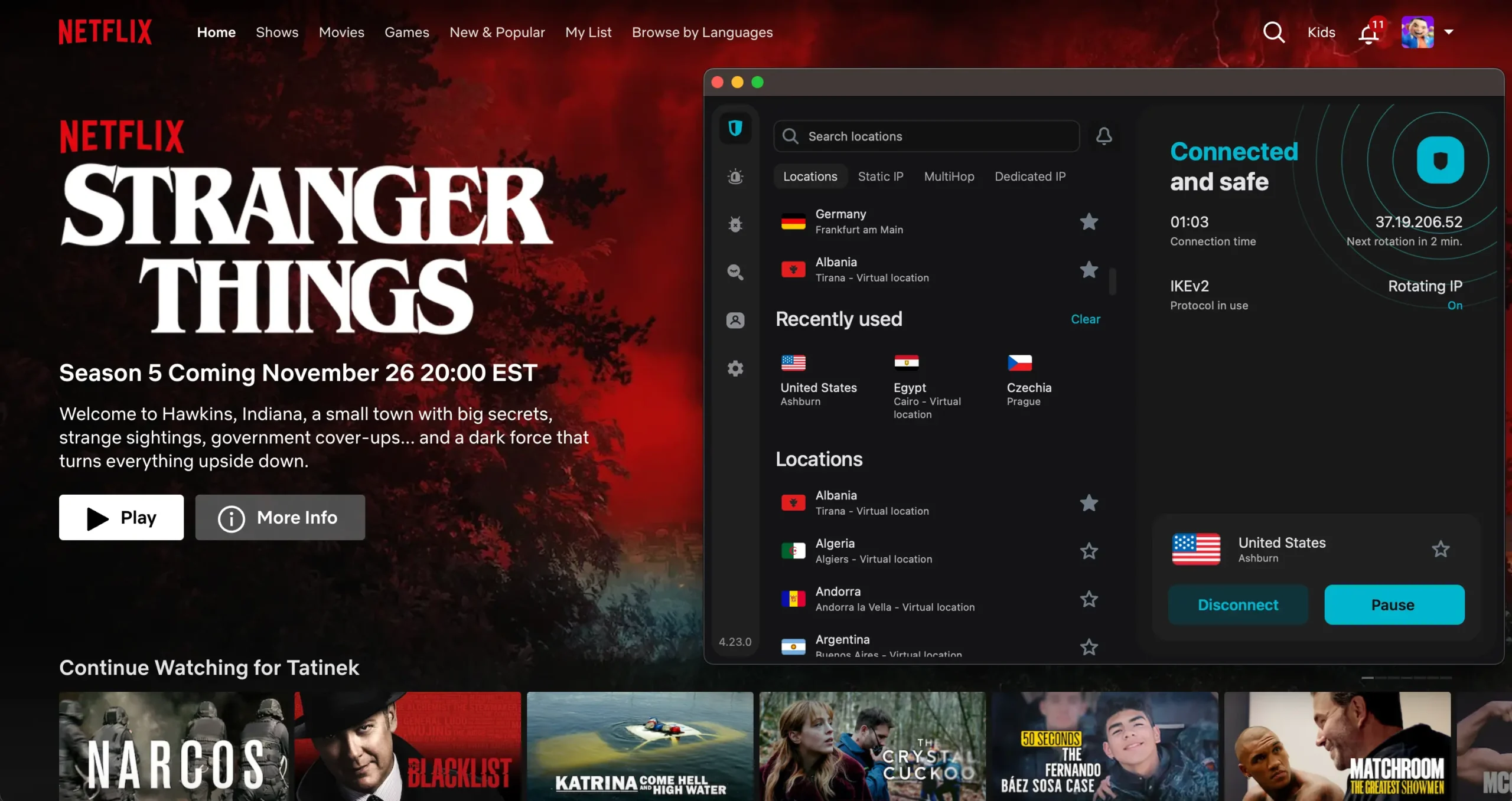
Let’s get one thing straight: people in Egypt stream. A lot. But without a VPN, what you get on Netflix or YouTube is only a fraction of what’s available elsewhere.
Amira ran tests on all major platforms:
| Platform | Server Used | Result |
|---|---|---|
| Netflix US | Los Angeles | Unblocked in HD/4K |
| Hulu | New York | Fully functional |
| Disney+ | Frankfurt | No issues |
| BBC iPlayer | Manchester | Smooth playback |
| Max (HBO) | Atlanta | No geo-blocks |
| YouTube TV | Chicago | Worked after short delay |
“My little cousins were watching Disney+ on a tablet in Aswan with Surfshark running through Germany. No buffering,” Amira said. “That alone made my Ramadan.”
The best part? All of this worked across 4 different devices at once, without any limit. That’s what unlimited devices really means.
WiFi in Egypt: Not for the Faint of Heart
Karim tested Surfshark on public networks in central Cairo, including a coworking café in Zamalek where more than 20 people shared the same WiFi.
“You open your laptop and see five networks named ‘Free_Cafe_WiFi’ and half of them are traps. I’ve seen cloned logins that mimic Google’s splash screen. Most people wouldn’t notice.”
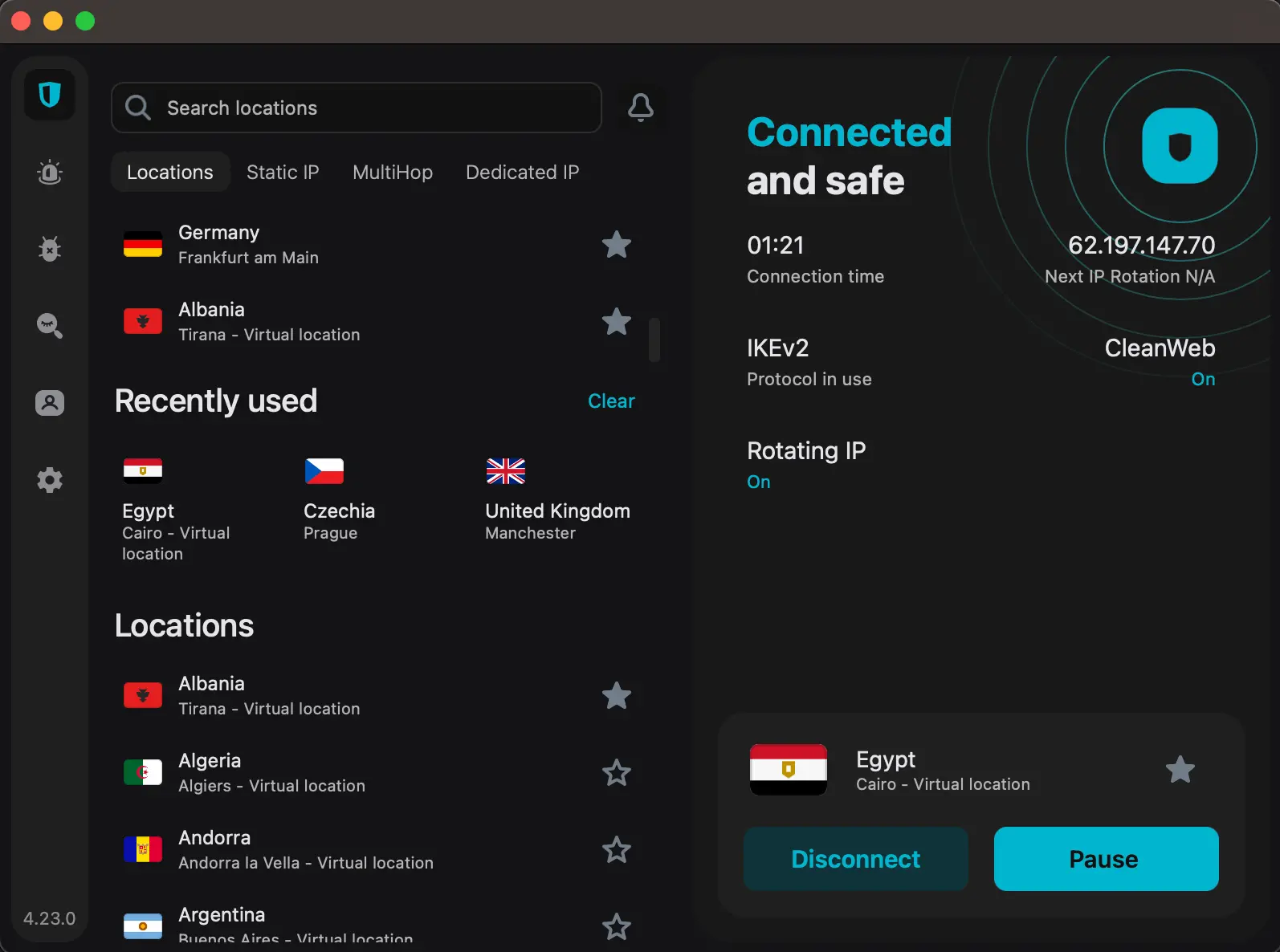
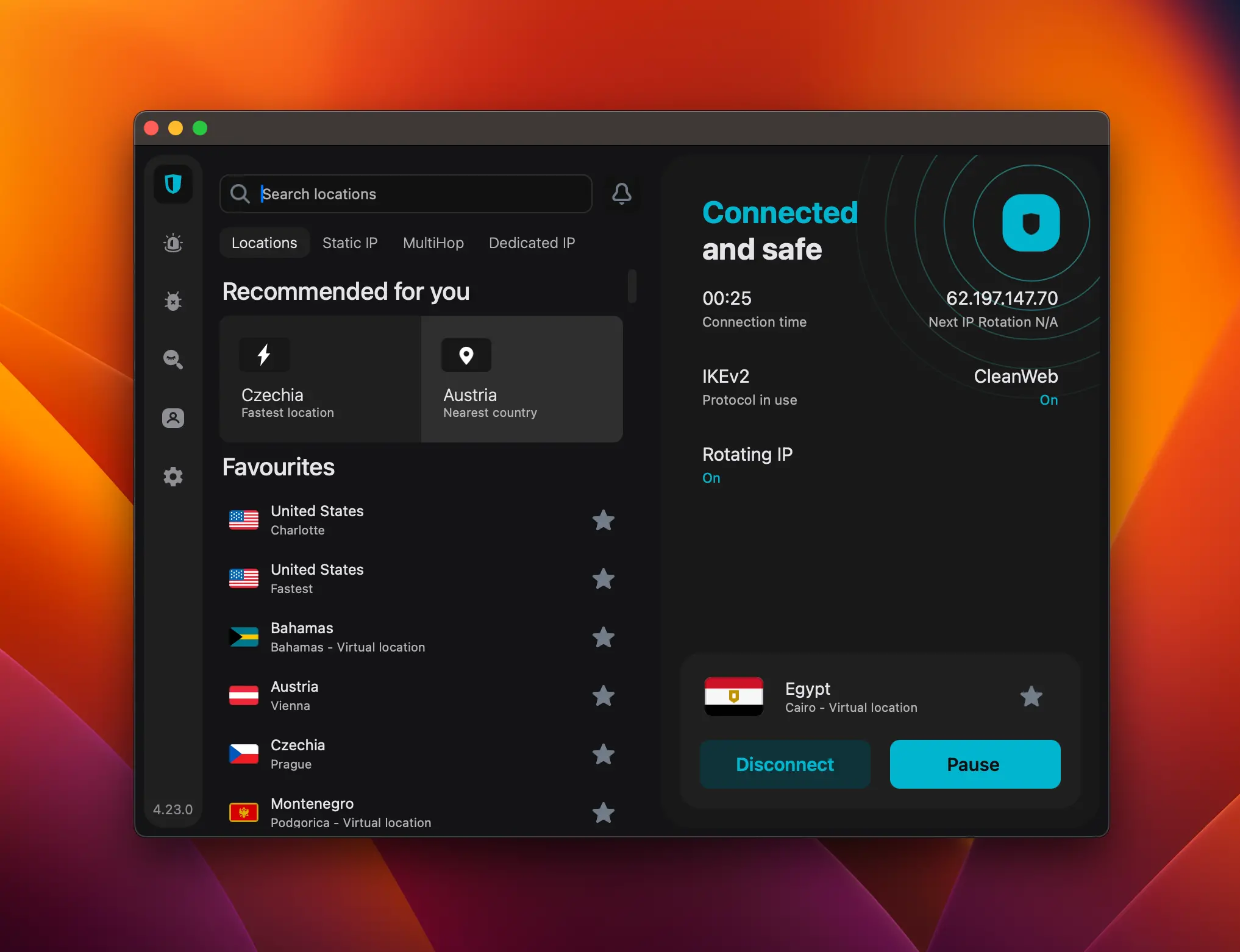
With Surfshark active and CleanWeb turned on, he never even saw the fake pages. DNS leaks were blocked. Malware domains didn’t load. And the kill switch kicked in exactly when it needed to.
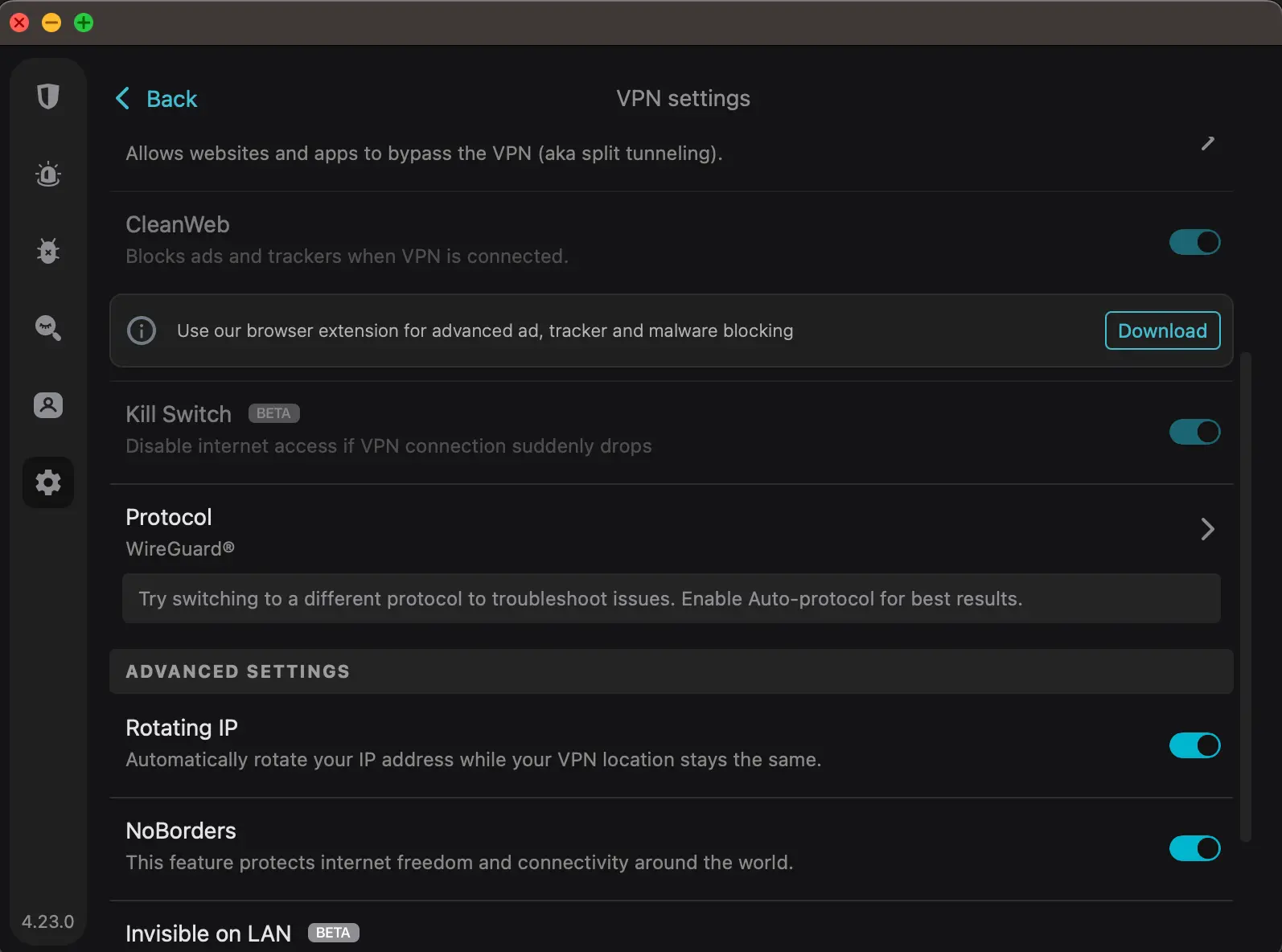
In Hurghada, Amira ran into a familiar problem: captive portals. Those hotel login screens that hijack your connection before giving you internet access. She connected, launched Surfshark on her Android phone, selected “Bypasser” mode to exclude local DNS, and got full internet within seconds.
“I didn’t even know that was a thing. Surfshark actually helped me bypass the broken login and get online.”
Real Speed Test Results (Logged from Egypt)
| Location | Network Type | With SurfShark VPN |
|---|---|---|
| Cairo (fiber, home) | 82 Mbps | 74 Mbps |
| Hurghada (hotel WiFi) | 41 Mbps | 38 Mbps |
| Cairo Airport (4G mobile) | 22 Mbps | 20 Mbps |
| Aswan (ADSL) | 12 Mbps | 11 Mbps |
| Alexandria (coworking) | 63 Mbps | 59 Mbps |
On average, Surfshark caused a 7–10 percent drop in raw speed, but stability and reliability increased across the board. Google Docs synced faster. Slack stayed connected. Uploads finished without timing out.
Karim said it best:
“It’s not just about speed. It’s about not wondering when the connection will break.”
Why Unlimited Devices is a Bigger Deal in Egypt Than You Think
This was probably my biggest “a-ha” moment from the test.
In countries where internet can be slow, shared, or limited, having unlimited VPN access across all your devices isn’t just convenient it’s essential.
Amira has Surfshark running on:
- her MacBook Air
- a Samsung smart TV
- her brother’s PS5
- her dad’s 10-year-old laptop
- and her own Android phone
All from one account. And no one’s ever kicked off.
“It sounds basic, but in a house where five people are sharing one connection, that matters.”
Same here. I run Surfshark on my laptop, phone, tablet, router, and Smart TV and still have space left for colleagues during travel. No other premium VPN lets you do that.
Final Verdict: Surfshark Works in Egypt — And Then Some
Whether you’re traveling to Egypt, living there full-time, or working remotely with teams in the region, Surfshark is one of the few VPNs I can honestly recommend it.
- Bypassed streaming blocks
- Stayed stable even on sketchy WiFi
- Protected devices from DNS spoofing and fake networks
- It ran smoothly across multiple devices at once
- It offered features that genuinely made a difference (CleanWeb, Bypasser, Kill Switch)
If I had to describe Surfshark in one sentence?
It didn’t just keep me private it kept me connected.
Ready to Try It?
Don’t wait until you’re locked out of Netflix, losing work files on hotel WiFi, or exposed on a fake network in a Cairo café. For the price of one Egyptian koshary plate per month, you’ll get peace of mind across all your devices.
Frequently Asked Questions
Is Surfshark legal in Egypt?
Yes, using a VPN like Surfshark is legal in Egypt. There are no laws banning VPNs for personal use — many locals and expats rely on them daily for privacy and access.
Can I watch US Netflix and Hulu with Surfshark in Egypt?
Absolutely. We tested it from multiple cities using US servers, and both Netflix and Hulu worked perfectly in HD and 4K. No proxy errors, no buffering issues.
Does Surfshark slow down your internet in Egypt?
A little, usually 5 to 10 percent. But connections became more stable, especially on shared or mobile networks. Cloud tools and uploads actually worked better with it on.
How many devices can I use Surfshark on while in Egypt?
As many as you want. Surfshark offers unlimited devices under one account. We tested it on laptops, phones, smart TVs, and even an old PC — all worked fine.
Is it safe to use Surfshark on public WiFi in Egypt?
Yes and honestly, it’s recommended. Public WiFi in Egypt can be risky, especially in cafés and hotels. Surfshark’s CleanWeb and Kill Switch features add serious protection.